Judge blocks Washington’s new rules for who can be sheriff

Thurston County Superior Court Judge Christine Schaller on Friday permanently blocked the new rules for who may serve as an elected county sheriff in Washington. The attorney general’s office says it will appeal. The decision does not erase the whole statute. A written order is still expected later this month.

Gov. Bob Ferguson signed Second Substitute Senate Bill 5974 on April 1, 2026. The enrolled act is Chapter 258, Laws of 2026, and the signature line reads 9:35 a.m. The Senate’s final vote, on March 9, was 30–19. The House vote, on March 5, was 54–42, with the Legislature’s bill page listing two members excused. Sen. John Lovick, a Mill Creek Democrat and a former Snohomish County sheriff, was the lead sponsor. The act’s title says it modernizes rules for sheriffs, police chiefs, town marshals, volunteers, and related officers. Most of it was set to take effect April 30. Sections 6, 7, and 10 take effect Jan. 1, 2027.

Sheriffs in Washington are usually elected. King County’s is not. The law required them to meet minimums the state already applied to appointed police chiefs, the Washington State Standard reported: at least five years of law-enforcement experience, no felony or gross misdemeanor conviction, an age of at least 25, and no record of conduct that would get a state peace-officer certification revoked. Candidates would have had to clear a background check. A sheriff who was not already certified would have had nine months after taking office to get that certification from the Criminal Justice Training Commission, down from a year. Failing the new requirements, or losing certification, would be grounds to leave office, with county officials appointing a replacement. The route voters already had, a recall, is rarely used. Final decisions on taking a certification away are made by five-member commission panels, and those decisions can be appealed. In its April accounts, the Standard said the panels include three civilians and two police officials.

On Friday, Schaller said the Legislature may set reasonable qualifications for the office of sheriff, which the state constitution creates, but that several of these went past that line. “The qualifications under Section 9 are so expansive that they cannot be upheld,” she said, according to FOX 13 and KHQ, both of which covered the hearing in Olympia. The Center Square reported that she called the new age rule not narrowly tailored, because it applies to sheriffs and not to other county elected officials. That account also said the five-year experience rule does not apply to a sheriff already in office unless that sheriff runs in another county, and that she said the exemption undercuts the claim that elected and appointed leaders were being held to the same standard. She granted summary judgment against Section 9.

She also threw out the part of the law that would have had the Washington State Patrol decide, by a background check, whether a sheriff candidate met the new tests. The Center Square reported that she called eligibility for public office a judicial job, and said the statute handed it to an executive agency without telling the patrol how to settle a disputed fact, without a required hearing, and without a real path to court review. “There are no set of circumstances where this provision can be constitutionally applied,” she said. On speech, she struck provisions that let the training commission deny or pull a certification based in part on affiliation with “extremist organizations.” “The term extremist does not have a settled meaning,” she said. She called those rules vague and content-based, and said they reached more political speech and association than the state’s interest in public trust required. She also struck a requirement that a sheriff candidate swear, under penalty of perjury, to keep that certification as a condition of holding the office. She compared it to an oath the Washington Supreme Court had already rejected, and said this one was broader.

Not every challenge succeeded. Schaller upheld Section 16, which limits what a person deputized by a sheriff may do unless that person is a certified peace officer. She said the sheriff still has the core power to deputize, and that the Legislature may limit what those deputies do. The Washington State Standard reported that Friday’s ruling does not appear to block the law’s standards for police chiefs, or its limits on law-enforcement volunteers. The cases are not finished on paper. The Center Square reported that the plaintiffs are to send proposed orders to the state by Oct. 15, and that Schaller set a presentation for Oct. 23 at 9 a.m. The Standard said a formal order is expected later this month. Mike Faulk, a spokesperson for Attorney General Nick Brown, said the office will appeal. The statement, given to The Center Square, KHQ, and FOX 13, was: “We respectfully disagree with the judge’s decision. We intend to appeal to defend this important state law.”

Friday’s ruling follows a temporary block from the same judge. On April 29, the day before the law’s main effective date, Schaller stopped much of it from applying to sheriffs so this year’s filing would not run under the new rules. “It is a fundamental right to run for elected office, and to vote for elected office, with very, very few exceptions,” she said then, and she found the Legislature “may have exceeded its constitutional authority.” The state asked the Washington Supreme Court to lift that order. On May 5, Deputy Commissioner Walter Burton refused. He wrote that keeping the older rules in place for the time being did not show the immediate harm that would justify a stay. The Standard reported that sheriffs in 35 of the state’s 39 counties were up for election, and that candidate filing was underway that week.

Two cases produced Friday’s decision. One was brought by four eastern Washington sheriffs: John Nowels of Spokane County, Glenn Blakeslee of Pend Oreille County, Brad Manke of Stevens County, and Ray Maycumber of Ferry County. The other was filed by the Washington State Sheriffs’ Association. The Standard reported that a dozen sheriffs challenged the law. Their lawyer, Mark Lamb, said after the ruling that democracy includes the chance voters will elect someone others dislike, and that the answer is not a commission empowered to remove an official for conduct it finds offensive. Walla Walla County Sheriff Mark Crider, who is retiring this year, said he and other sheriffs were “fairly satisfied,” and that the law “would’ve disenfranchised the voters.” Anne Levinson, a retired judge who helped draft the bill, wrote after the hearing that there is “great harm to the public and in particular to vulnerable individuals if top law enforcement officials are allowed to continue in office after having committed serious misconduct.” In court Friday, Assistant Attorney General Kristen Valore said voters trust sheriffs to do the job, and that the Legislature passed the bill so sheriffs would meet the same basic qualifications as other law-enforcement leaders.

Lovick has framed the bill as accountability. “This legislation is about accountability,” he said in a statement FOX 13 published. “As a former sheriff, I know that trust between law enforcement leaders and the communities they are sworn to protect is built on maintaining the highest standards of professionalism and accountability.” He said leaders would be held to the same standards of conduct they ask of every other officer. KHQ quoted him asking why appointed or elected leaders should not face the standards applied to the people who work for them. Ferguson signed with a reservation about the vacancy process and did not veto that piece. “It’s a serious step when someone’s being removed from office, speaking as an elected official,” he told reporters on April 1. He said he had pressed the sponsors on that point, that he might look at improving the process in the next session, and that he was confident the law could withstand a court challenge. Rep. Roger Goodman, D-Kirkland, who led the bill in the House, said lawmakers had worked to make it constitutional and that he expected it to be upheld.

Sources

Pasco annexes 6-acre Harris Road ‘donut hole,’ zones R-3 for possible Broadmoor housing

PASCO — The Pasco City Council has agreed to annex a roughly 6.19-acre parcel at 11050 Harris Road — a Franklin County “donut hole” in the Broadmoor area — and assign it R-3 medium-density residential zoning, according to Tri-City Herald reporting.

The property sits south of Harris Road, west of Broadmoor Boulevard, and just north of Interstate 182. Owners are Larry and Malvina Goodwin; the annexation and zoning applicant is Haven Capital LLC. The site is mostly vacant, with water and sewer available along Harris Road.

Council held a public hearing on the annexation request Monday, Sep. 21, 2026. A Tri-City Herald story published Sep. 23 said the council agreed to bring the parcel into the city and zone it R-3. An earlier Herald report covered the hearing-examiner stage in August, when the request was framed as moving the county island into the city for housing rather than remaining under former county commercial zoning.

R-3 medium-density zoning allows a range of housing types, including detached and attached single-family homes, duplexes, triplexes, apartments, stacked flats, condominiums, cottage housing, and factory-assembled homes, the Herald reported. Under the Broadmoor Master Plan’s medium-density range of about 6 to 29 dwelling units per acre, the roughly 6-acre site could theoretically support on the order of 37 to 170 units — but that is a zoning envelope only. No specific housing project or unit count has been approved.

Haven Capital told the Herald that development could occur in one to two years, subject to construction plans and further city permits. The council’s annexation and R-3 decision did not approve a site plan; any future proposal would still need city review and could face traffic, infrastructure, or other requirements.

TRITOWN.INFO

Sources

Adams County Sheriff’s ‘Taser Tent’ VR booth headed to Ritzville, Othello fairs

RITZVILLE — Fairgoers in Adams County will get a rare chance this month to step into a deputy’s shoes — virtually — when the Adams County Sheriff’s Office brings its “Taser Tent” to the Wheat Land Communities Fair and the Othello Fair.

The tent uses virtual reality headsets to put adults into realistic law-enforcement call scenarios from a deputy’s perspective. Sheriff Dale Wagner has framed the exhibit as more than a gadget demo: a way for residents to see how quickly situations develop, how decisions are made, and why a TASER is treated as a valuable tool for deputies.

“Now is your chance to experience it for yourself,” Wagner said in announcing the Taser Tent. On social media, he added that visitors “will see firsthand how quickly a situation can develop, experience the decision-making process, and gain a better understanding of why the TASER is such a valuable tool for law enforcement.”

“It’s an opportunity for our community to experience situations from a completely different perspective and learn more about the tools, training, and decisions involved in keeping our communities safe,” he said.

Radio coverage of the same announcement described the simulator as the kind of VR training a growing number of law-enforcement agencies use, with participants facing typical call types — such as a prowler or an altercation — then making choices and learning whether those decisions held up. The stated aim is greater public understanding of how challenging those scenarios can be.

When and where

According to the Adams County Sheriff’s Office schedule reported by local papers:

  • Wheat Land Communities Fair — Friday, Sept. 4, 3–7 p.m., 811 E. Main Ave., Ritzville
  • Othello Fair — Friday and Saturday, Sept. 18–19, 1–7 p.m., Othello Fairgrounds, 1990 Fairgrounds Road

Each simulation lasts about 30 minutes and can include up to four adult participants. The experience is limited to people 18 and older. Space is limited, and reservations are required.

Wagner advised fairgoers to stop by the Adams County Sheriff’s Office booth at the fair to book a time, then return for the scheduled slot. “Come see something new at the fair, meet members of your Sheriff’s Office, and experience a side of law enforcement you normally don’t get the opportunity to see,” he said.

Sources

Opinion: Emotions, not economics, may steer some Baumgartner voters, columnist argues

Editor’s note: The following is an original ConnellWA.com commentary summarizing an opinion column by Norm Luther of Spokane, first published by Franklin Connection. Views expressed are those of the columnist and are not news reporting by ConnellWA.com.

Why do some voters cast ballots that seem to run against their own economic interests? That long-running question is the starting point of a recent opinion column by Spokane resident Norm Luther, who directs the critique at supporters of U.S. Rep. Michael Baumgartner.

Luther recalls his father’s view that many people so strongly dream of joining the wealthy that they identify with them and vote accordingly. In Luther’s telling, that dream should be harder to sustain today: he argues economic mobility has diminished, including through what he calls the billionaire-friendly “One Big Beautiful Bill,” which he says Baumgartner championed. Hard work, Luther writes, may no longer guarantee economic security.

He also points to years of partisan gridlock in Washington, D.C. Luther says longtime Republican Senate leader Mitch McConnell, after vowing to make Democrat Barack Obama a one-term president, opposed measures from Obama and later from Democratic former President Joe Biden that Luther describes as aimed at helping the working class — leaving that class, in his view, justifiably feeling forgotten.

Emotion, not pocketbook math, is Luther’s main explanation for how many voters choose. He contends that many people relate emotionally to President Donald Trump’s angry rhetoric even though, in Luther’s assessment, Trump has not advanced their welfare and — together with congressional Republicans including Baumgartner — has made life harder for them. “Unfortunately, many people vote their emotions, rather than rationally in agreement with their best interests,” Luther writes.

For Baumgartner’s supporters specifically, Luther offers a simpler answer: he believes many have not watched the congressman’s record closely enough to see what Luther calls a sharp gap between what Baumgartner says and how he votes. Luther labels that approach “shrewdly deceitful” — a characterization that is Luther’s opinion, not an established finding.

Luther’s column does not present new legislative vote tallies or independent economic analysis; it is a personal argument about voter psychology and representation in Eastern Washington. Readers seeking the full original text can find it via the source link below.

Sources

Opinion: Half-ton farm pickups may get caught by WA luxury vehicle tax

Editor’s note: The following is based on an opinion column from the Washington Policy Center, republished by Franklin Connection. It reflects the author’s policy analysis and recommendations, not a ConnellWA.com news investigation.

For many North Franklin farm and ranch families, the pickup in the yard is less a status symbol than a rolling toolbox — dusty paperwork, ball caps, baling twine, and field dirt included. An agriculture policy analyst at the Washington Policy Center argues that when it’s time to replace that truck, Washington’s relatively new “luxury” motor vehicle tax could treat some everyday half-ton work pickups like luxury cars.

According to the Washington State Department of Revenue, the state began collecting an additional 8% luxury motor vehicle tax on Jan. 1, 2026, on the portion of a new or used vehicle’s selling price (or lease fair market value) above a deduction that started at $100,000. The tax stacks on top of regular retail sales tax and motor vehicle sales/use tax. The deduction amount rises 2% each July 1; for July 1, 2026, through June 30, 2027, DOR lists it at $102,000.

DOR and state law list several exemptions, including commercial motor vehicles, motor vehicles with a gross vehicle weight rating greater than 10,000 pounds (other than motor homes), and farm tractors or farm vehicles as defined in state statute — unless used in cannabis production.

In an August 2026 column, Pam Lewison, director of agriculture policy at the Washington Policy Center, says the rub for many producers is that they no longer rely only on heavier three-quarter- and one-ton diesels for daily work. Half-ton pickups, she writes, are often preferred for fuel economy and getting into tougher field spots — and many of those trucks sit under the 10,000-pound weight line while carrying sticker prices that can push past the luxury-tax threshold before tax, title, and license.

Lewison’s view is that those trucks function as both daily drivers and farm tools, not luxuries. She recommends the Legislature amend the tax — for example by lowering the weight exemption bar to about 7,500 pounds and/or raising the price threshold toward $150,000 — so more common half-ton farm work trucks are less likely to be swept in. Those figures and proposed changes are her recommendations, not current law.

Local growers and ranchers shopping for a replacement pickup may want to confirm with a dealer or tax professional how weight rating, farm-vehicle definitions, and price interact before signing — especially if the truck is a lighter half-ton configured more like a dual-use daily driver than a CDL-class commercial truck.

Sources

sddefault

Connell's Camp Outlook - History

Explore the 30-year regulatory, legal, and operational history of the facility in Connell, Washington, detailing its transition from the "Second Chance" juvenile rehabilitation camp to Helios Nursery’s H-2A farmworker housing.

20150520_113452_hdr[1]

Small Town, Big Impact: A Treatment Counselor’s Perspective

Article Summary

The author reflects on their work as a government treatment counselor alongside colleagues Meghan and Patti at Camp Outlook in Connell, Washington. They describe the deep rewards of guiding youth through difficult mistakes and witnessing their long-term transformation—highlighted by a chance reunion with a former 13-year-old participant who grew up to turn his life around.

In addition to its role as the home of Camp Outlook, Connell is featured as a welcoming small town (population ~5,000) with impressive athletic fields, main street murals and sculptures, and popular community gatherings like the September Fall Festival and November Wine and Brew Festival.

See Full Article >>

Pasco man, passenger hospitalized after Highway 240 SUV rollover near Columbia Park

KENNEWICK — A Pasco man and his passenger were hospitalized after a westbound SUV crossed the median and rolled on state Highway 240 near Columbia Park on Thursday afternoon, Aug. 6, according to the Washington State Patrol and court documents cited by local reporting.

Garnet S. Willis, 57, of Pasco, was driving a 2003 Dodge Durango when the vehicle went into the median and flipped alongside Columbia Park, the patrol reported. His passenger, Justice N. Davis, 25, of Richland, was also taken to the hospital. Both were transported to Kadlec Regional Medical Center.

Dispatch reports described the Durango rolling five times before ending up on the other side of the median near the park entrance shortly before 4 p.m., according to Tri-City Herald coverage. Afternoon traffic was disrupted; one eastbound lane was closed for a time, and the Washington State Department of Transportation said conditions were back to normal by about 5:30 p.m.

Benton County deputies found Willis and Davis outside the SUV, court documents said. Willis told a deputy he did not know how the crash happened and also claimed he was not the driver, according to those documents. A witness reported that the Durango had been speeding before it crossed the median and that Willis was in the driver’s seat.

The Washington State Patrol took over the crash investigation. The patrol’s initial account said drugs and/or alcohol were a factor and that the cause remained under investigation. Willis was not wearing a seat belt and faced possible charges; Davis was wearing a seat belt, the patrol reported.

Court documents later cited by the Tri-City Herald said Willis had lethargic speech and movement, with pupils that appeared very dilated and cloudy — findings a trooper noted as unusual on a sunny, bright day. Willis refused an examination to determine whether he was intoxicated. A drug recognition expert believed he was under the influence of a stimulant, the documents said.

Davis suffered multiple vertebral fractures and a broken ankle, according to the court-document reporting. Willis pleaded not guilty — described in that coverage as an innocent plea — to one count of vehicular assault in Benton County Superior Court and was being held in the Benton County jail on $50,000 bail.

The same reporting said Willis also faced a separate Franklin County Superior Court matter from June 17, in which he allegedly ran from a state trooper near 10th Avenue and Ainsworth Street in Pasco and had been out on $5,000 bond in that case. Older prior convictions were noted as mostly at least two decades old.

Sources

772904973_1976093999764048_6624349718085020673_n copy

TRAC as a Casino in Pasco?

Yakama leaders hear Franklin County possible Pasco casino proposal

By Ronnie Washines

--Yakama Nation Review

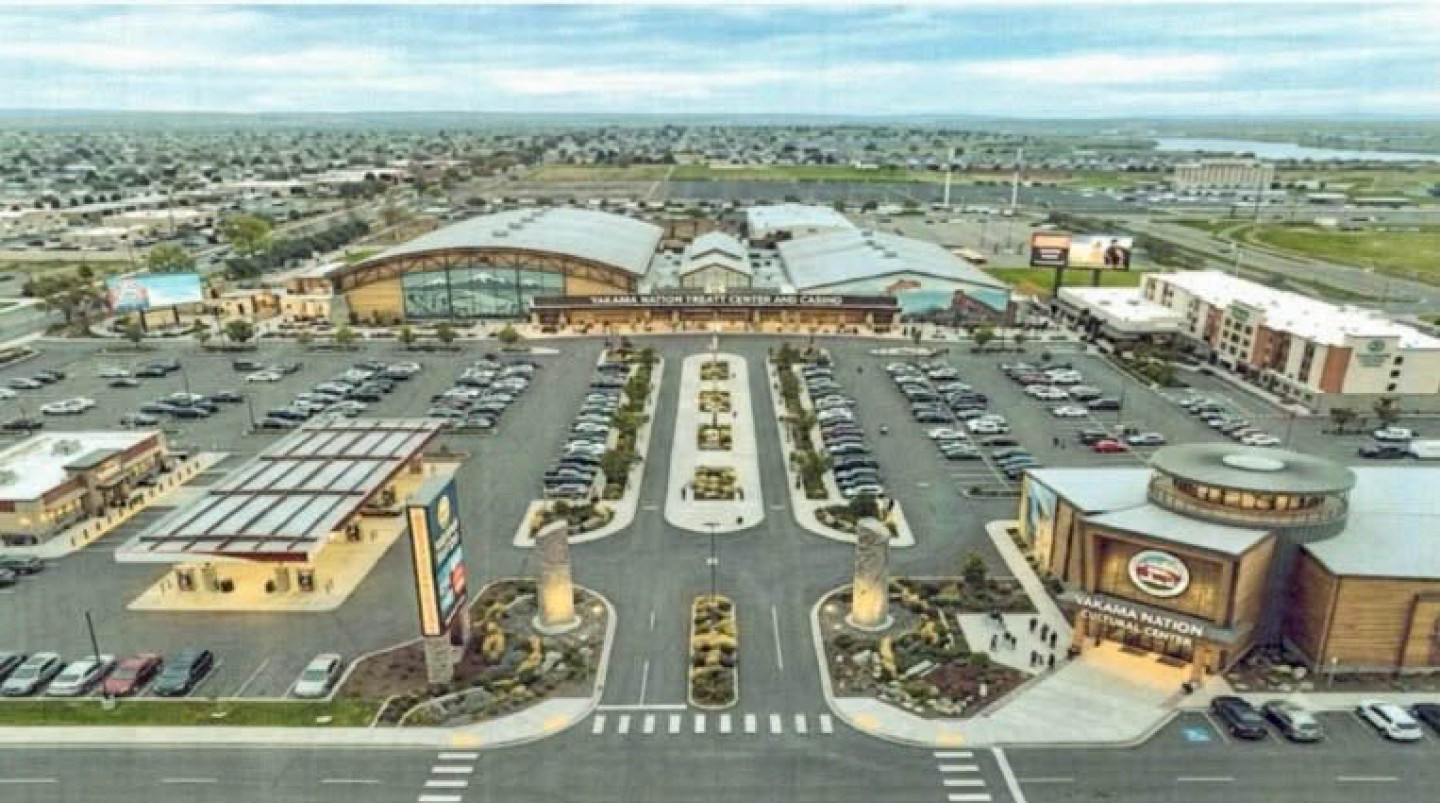
TOPPENISH, Wash. – Franklin County officials sent a representative Aug. 4 to present an idea for the Yakama Tribal Council to consider moving forward with to open a casino in Pasco, Wash.

Franklin County Administrator Brian R. Dansel told the tribal council that the county is willing to enter into a partnership with the Yakama Nation to turn its HAPO Center into a tribal casino.

“Pasco is a prime location for a casino,” he said.

The 85,000 square foot HAPO Center largest venues are currently a 39,000 square foot exposition hall and 43,000 square foot arena, which are separated by an atrium containing conference rooms, office space and restrooms.

In comparison, the Yakama Legends Casino gaming area is currently 87,000 square feet.

The HAPO Center campus also includes an ice pavilion and an RV park.

Franklin County and the City of Pasco had a 30-year partnership agreement to operate the facility, which included adjacent sports fields, which the county is currently in separate negotiations. That pact expired last May and Franklin County Commissioners voted to take full control of it all.

Since then, the county has been exploring new uses for the facilities, thus bringing them to the Yakama Nation.

See Full Post >>

HAPO CENTER UPDATE

--Pasco City Councilman Leo Perales

City’s Role:

Under the current agreement, the City of Pasco and Franklin County are each responsible for 50% of operating costs that exceed HAPO Center revenues. The City has averaged approximately $188,000 per year toward its share of those costs.

The HAPO Center is currently operated by Harris-White-Leasure Group under a third-party management agreement with Franklin County. The City of Pasco does not manage the day-to-day operations of the facility.

The City also participates on the HAPO Center Advisory Board. However, the board has very limited practical authority. Meetings largely consist of updates and discussions regarding current events, operations, and revenues at the HAPO Center, rather than making decisions regarding the facility.

HAPO Center Agreement:

The lease expired after December 2025. The City and County have been discussing their future roles and what a partnership could look like going forward, but the City has received very little communication from the County regarding its intentions.

Franklin County recently sent a brief letter invoking a provision in the original TRAC agreement that provides for the County to pay the City of Pasco $1 for the City’s interest in the remaining property upon termination of the agreement. The County included a $1 check with the letter.

My interpretation: The $1 is not intended to represent the value of the HAPO Center. Rather, it appears to serve as the contractual mechanism for resolving the City’s interest in the property under the original agreement.

Softball Complex:

The City has provided Franklin County with a proposed lease extension for the softball fields and has not received a response.

The City is also still awaiting a response from the County Commission regarding the City’s second offer to purchase the softball complex. That offer was valid for 45 days, and nearly two months have now passed without a response.

Potential Tribal Casino:

On August 4, a representative of Franklin County made an introductory presentation to the Yakama Tribal Council regarding the possibility of developing the HAPO Center into a tribal casino.

There are obviously many questions about what happens next. I’ll continue sharing information with the public as we learn more about the County’s plans and what they could mean for the HAPO Center, the softball complex, and the City of Pasco.

Franklin County says:

Transcript — Franklin County Two-Minute Memo - Episode 3 - Aug 14, 2026
Speaker: Brian Danzel, Franklin County Administrator

"Hi, I'm Brian Danzel, Franklin County Administrator, and welcome to Episode 3 of the Franklin County Two-Minute Memo.

I wanted to take a minute to address some of the public interest and rumors we've been hearing about the Hapo Center facility.

We were asked to give an introductory presentation to the Yakama Tribal Council regarding the Hapo Center. That presentation was informal. There were no decisions made, no agreements signed, and there is no final deal.

If there were any future action regarding the Hapo Center, it would have to come before an open public meeting with public input.

For some historical context, the land the Hapo Center sits on was part of territories prior to the 1855 Treaty that included the Yakama Nation.

This kind of communication is routine. It's similar to the City of Pasco welcoming the Confederated Tribes of the Colville Reservation into their chambers. It's just routine local and tribal communication.

I also want to directly address a narrative that's been circulating — that the county is planning to put a casino at the Hapo Center. That is not true.

We appreciate the questions. Please keep asking them in the comments or by email, and we look forward to doing more of these memos in the future."

Tri-Cities Area Journal of Business

August 16, 2026

Ty Beaver

Franklin County’s administrator recently spoke with the Confederated Tribes and Bands of the Yakama Nation about transforming the Pasco’s HAPO Center into a tribal casino, saying if there’s any tribe the county should be talking to, it’s the Yakamas.

Brian Dansel made a presentation to the Yakama Tribal Council on Aug. 4 pitching the opportunity for a partnership with Franklin County to pursue the proposal at the events venue, according to the Toppenish-based tribal newspaper Yakama Nation Review. 

Dansel said in a Franklin County social media post that the county was asked by the Yakamas for the presentation and that multiple parties are interested in the HAPO Center property. “We have supplied materials to all the different entities that are interested in the HAPO Center,” he said, noting that no decisions, deals or agreements have been made with the tribe.

The county has recently asserted ownership of the facility and the adjacent Pasco Sports Complex after its contract expired with the city of Pasco.

See full article >>

FALLFEST2022BW

North Franklin News | Issue 11

NORTH FRANKLIN NEWS - ISSUE 11 - AUG 12, 2026

  • We publish up to 1-2 Text Messages like this each month.
  • A service of the Greater Connell Area Chamber of Commerce.
  • Chamber members can add info to these announcements free of charge.

Thanks for signing up!

The purpose of this North Franklin News system is to let you know what's going on in the community.

Messages up to 1-2 times a month direct to your phone, without requiring you to be on any form of social media or needing to log in to something.

Each issue will be different and we will continue to improve the format and content as we go forward.

If it looks similar to various social feeds, that is intentional. There is also submitted content and links to other local sources.

We have curated the feed with the most relevant and requested content in an easy-to-digest arrangement.

Thanks again!


Screenshot
764006698_122115235425338278_8882985080043266947_n

769222410_27931046349869789_6570360304255843081_n

773632509_1347603650878498_8619581830408313801_n

PORTOFPASCO725592960_1929257700900585_5836522757755858180_n copy

The Port of Pasco is proud to finalize an interlocal agreement with the City of Connell, Washington. This partnership formalizes the Port’s interest in Connell’s economic development through strategic planning, business recruitment, marketing support, and more. Cheers to a bright future for North Franklin County!
#PortofPasco #CityofConnell #interlocalagreement #economicdevelopment #partnership


Franklin Co. Fire Dist. 1


NFSD Transportation

NOW HIRING


Fall Festival

FAMILY FUN ALL DAY

11

September

A SEPTEMBER TRADITION

770847378_28458238343760826_5263125083575551470_n

sunset

SPIDERMAN

AUG 14-16
-

Sunset Theatre 7:30pm SPIDERMAN [PG13]. Message us to reserve recliners!


774680422_1574727158028143_781720975698943201_n
772074483_3221537611352431_8201339599871723992_n
772707692_3221537601352432_4075559870920444534_n
769777690_18617089474039475_1810589475760841305_n
mcl
765192351_1528622588482209_33831867757683797_n copy


773403031_1346876614284535_7759150570210596518_n

Kaffrin's Coffee
Wild Olive's Charcuterie
Pizza Station

Fall Festival

FAMILY FUN ALL DAY

11

September

A SEPTEMBER TRADITION

menu_logo_chamber
CHAMBER MENU

Contact

PO Box 401 Connell WA 99326 connellchamber@gmail.com


Copyright 2002-2026 CONNELLWA.COM

All Rights Reserved.

BEVON DAVIS, EDITOR

IN COOPERATION WITH GCACC

Contact Info

PO BOX 156 Connell, WA