West Richland adopts interim data center rules; moratorium fails on tie vote

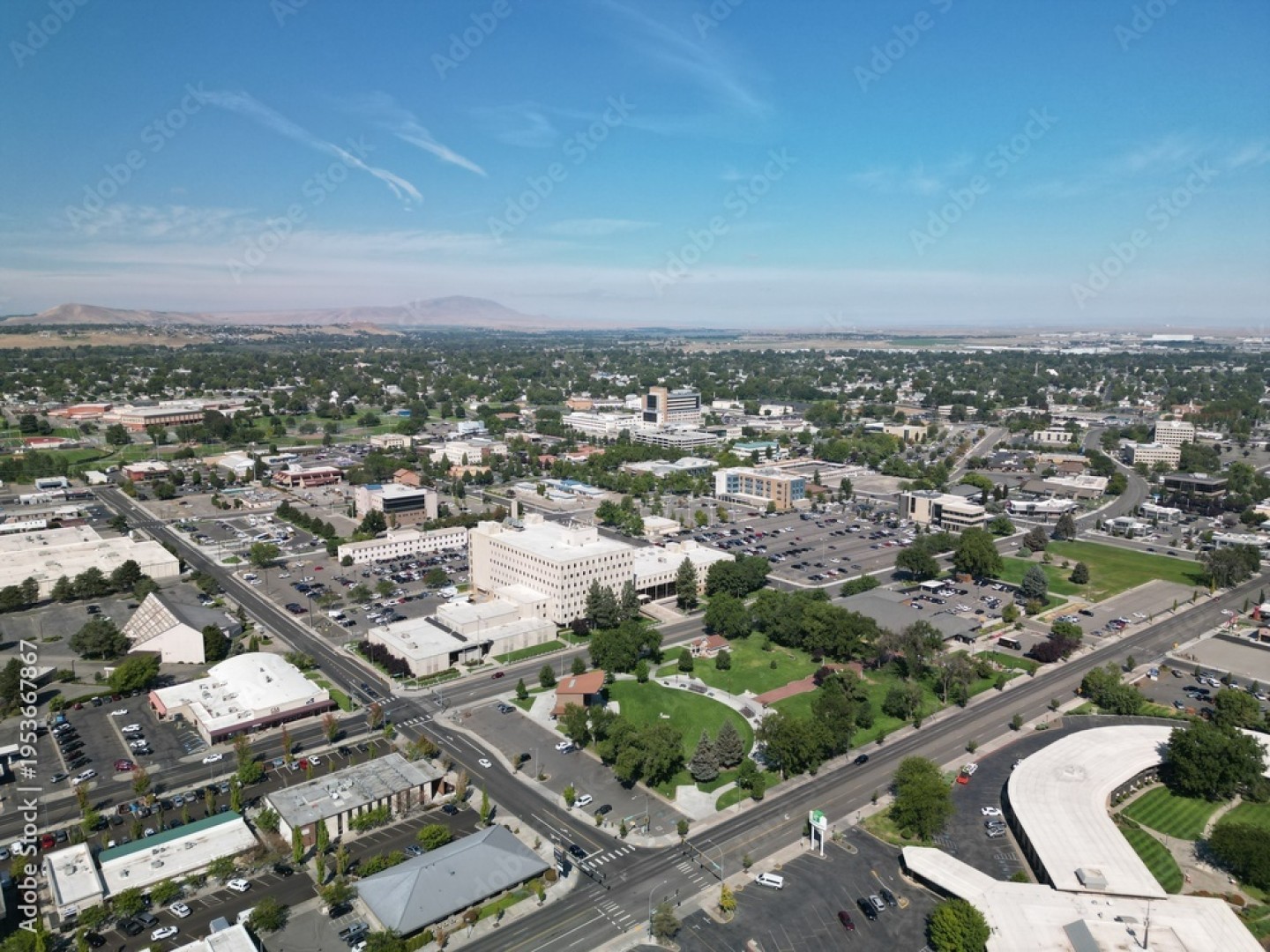
The West Richland City Council on Tuesday, Nov. 3, 2026, adopted interim rules for data centers that bar them from the city's light industrial zone, prohibit cryptocurrency mining citywide and strip out an existing noise exemption. A push by residents for a six-month moratorium came up short, failing on a tie vote, as a large crowd packed the meeting days after Amazon confirmed it plans a data center campus in the city.

All six councilmembers voted for the interim regulations, NonStop Local reported. Council also added an amendment requiring any future development agreement for a data center to carry protections equal to or stronger than city code. As drafted in the city's agenda packet, a development agreement could otherwise set its own standards and override conflicting parts of the new data center chapter.

Councilmember Kate Moran made a separate motion aimed at a six-month moratorium. It failed 3-3. Many in the audience said the adopted rules did not go far enough and asked the city to stop taking data center applications altogether. Tension boiled over at points, and Mayor Fred Brink paused the meeting to restore order after residents objected that the vote was coming before public comment.

City staff described the measure as an interim official control that would last six months unless the council repeals or renews it. According to the ordinance in the agenda packet, it takes effect immediately and applies only to applications filed after that, so it does not affect projects that already have vested rights. The Tri-Cities Area Journal of Business reported that Amazon has not yet filed any permit applications.

Amazon confirmed this week that it is the buyer of roughly 1,000 acres at Lewis & Clark Ranch, northeast of Ruppert Road. Dallas-based developer Trammell Crow first bought the land in July from the estate of farmer Frank Tiegs. Amazon Web Services plans three data center buildings to start, and the campus could eventually grow to as many as 21. About 200 homes sit across Ruppert Road from the site, which has driven much of the local pushback.

Tri-Cities Data Center Watch, a group opposed to the project, had earlier handed the council petitions with 853 West Richland signatures asking for a six-month moratorium, according to the council's meeting minutes.

A public hearing on the interim rules is set for 6 p.m. Dec. 15 at West Richland City Hall, 3100 Belmont Blvd. NonStop Local reported that Planning Commission work on permanent rules is expected to continue into February, with a first reading of a final ordinance targeted for March.

Amazon will hold a public open house on the project from 5 to 8 p.m. Thursday, Nov. 19, at Enterprise Middle School, 5200 Paradise Way in West Richland.

Sources

Typical WA State buffoonery: Vote yes on I-645

Opinion: This piece reflects the view of ConnellWA.com.

Vote yes on I-645. Washington's new income tax was rushed through in the last days of a short session and walled off from a public vote. It rests on revenue guesses that keep changing, and it runs straight into a 93-year-old Supreme Court ruling that says the state can't do this. We call that corrupt, mismanaged and unconstitutional, and I-645 is the only chance to stop it before a single payment comes due. Ballots are due by 8 p.m. on Tuesday, Nov. 3.

Here's what's at stake. In 2024 the Legislature passed Initiative 2111, banning state and local taxes on individual income. Two years later, lawmakers passed Engrossed Substitute Senate Bill 6346, which carves itself out of that ban and imposes a 9.9% tax on individual income above $1 million starting Jan. 1, 2028. I-645 repeals the tax and writes the ban back into law for the state, counties and cities alike.

Unconstitutional: The courts have already said no

Washingtonians have been here before. In 1932 voters approved a state income tax, and in 1933 the state Supreme Court threw it out in Culliton v. Chase. The court held that income is property and that the state constitution requires property to be taxed at a uniform rate. That ruling has never been overturned. Courts relied on the same principle when they struck down Seattle's income tax on high earners in 2019, KUOW reported.

The tax's backers know this. The bill's lead author, Sen. Jamie Pedersen, D-Seattle, says Culliton was wrongly decided, and Democratic leaders are betting the Supreme Court will overturn it, Axios reported. In March, the House rejected, 46-49, an amendment that would have made the tax contingent on voters first amending the constitution to allow it, according to the Washington State Standard. Rather than change the constitution, they passed the tax and are counting on the courts to change the law.

The challenge is already in court. In April, a lawsuit was filed in Klickitat County Superior Court arguing that the tax violates the uniformity requirement. The plaintiffs include a builder and a marketing-business owner who would owe the tax, along with the Yakima Klickitat Farm Association, the Building Industry Association of Washington and the National Federation of Independent Business. Washington shouldn't build its budget on a bet against its own Supreme Court.

Corrupt: A process designed to keep voters out

We use "corrupt" to describe how this law was made, not to accuse anyone of a crime. In our view, the process bent the rules of representative government to avoid the people's judgment.

Look at the record. Republicans said new provisions made public the Friday before the House vote left no time to vet them, and their motion to set the bill aside failed on a party-line 58-38 vote. The House passed it 51-46 on March 10 after more than 24 hours of nonstop floor debate, two days before the end of the 60-day session, and eight Democrats voted no. The Senate signed off the next day.

Lawmakers also attached a "necessity clause" declaring the tax necessary to support state government, a move that blocks a citizen referendum. They voted down an amendment that would have sent the tax to the November ballot. When Let's Go Washington asked the state Supreme Court to allow a referendum anyway, the court ruled in May that the law falls under that exception and is not subject to referendum. That ruling did not address whether the tax itself is constitutional.

The result: to get a say, opponents had to gather more than 300,000 signatures for an initiative, double what a referendum requires, according to the Washington State Standard. Washington voters have rejected an income tax 10 times since 1934, most recently in 2010 by a 64%-36% margin. This time, lawmakers made sure voters couldn't simply refer it to the ballot.

Mismanaged: Spending money that doesn't exist

This tax was sold as the answer to a budget mess, and the budget is still a mess. In 2025, Gov. Bob Ferguson's office described closing a "$16 billion budget hole," and the state then faced another shortfall in the supplemental budget. In September, the Washington State Standard reported that the latest revenue forecast won't erase a several-hundred-million-dollar deficit in the 2028 fiscal year or make a dent in the multibillion-dollar shortfall expected in the next budget. That is the third straight year lawmakers face a shortfall. Senate Ways and Means Chair June Robinson, D-Everett, said, "I think we need to find ways to reduce current spending so that we can balance in fiscal year 2028."

Meanwhile, the state is already planning around money it hasn't collected. The bill pledges income tax proceeds to expand the Working Families Tax Credit and earmarks 5% for child care and early learning starting in 2029. The official fiscal impact statement also lists free school meals and transfers to local governments as intended uses. And the September forecast's boost for the next budget comes mainly from the income tax, which won't produce a dime until 2029, and only if it survives the courts and the ballot. "Much of the predicted increase comes with an asterisk," said Sen. Chris Gildon, R-Puyallup, the Senate Republicans' lead budget writer.

The estimates themselves keep moving:

  • When the bill passed, the state assumed about 21,000 filers and $2.7 billion for the 2027-29 budget.
  • Over the summer, the Department of Revenue raised that to $3.1 billion.
  • In September, the state's chief economist projected $3.5 billion for 2027-29 and $9.4 billion for 2029-31, and he estimates 25,000 filers in the first year.

Those numbers could go up or down again in November. A budget built on figures that change every few months isn't a plan. It's a gamble.

Nobody has paid this tax. Keep it that way.

No estimated payments are required for 2028, so the first checks wouldn't be due until April 2029, according to the Office of Financial Management. A yes vote doesn't take a dime from any school, clinic or program that is funded today. "How can you call something a tax break," Yes on I-645 campaign chair Steve Gordon asked in an interview with The Seattle Times, "when there's no tax being collected?"

That's why the No campaign's "$13 billion tax break" line doesn't hold up. A Seattle Times fact-check found the figure stacks four years of projected collections, 2029 through 2032, into one number. The paper warned that leaving out the four-year window "could create the misleading impression" that the tax would raise $13 billion a year. The state's own fiscal impact statement estimates about $11.4 billion over fiscal years 2027 through 2031, and two of those years would collect nothing at all.

You keep the tax cuts

I-645 leaves the companion tax cuts in place: reduced taxes for small businesses, expanded rebates for low- and middle-income households, and no more sales tax on diapers, over-the-counter medicines and personal hygiene products. You keep every one of those and drop the income tax. The nonpartisan House Office of Program Research summary says I-645 also bars the state and local governments from taxing individual income. It defines "income" as "any gain or benefit measured in money derived from an individual's capital, labor, property, or other source." If approved, it takes effect Dec. 3, 2026.

A $1 million threshold today. What about tomorrow?

Former U.S. Rep. Jaime Herrera Beutler, who works with the Yes campaign, wrote in The Spokesman-Review that lawmakers rejected "multiple attempts" to permanently keep the $1 million threshold from being lowered. If the line is meant to stay put, why not lock it in? A law that was written to keep voters out shouldn't be trusted to keep its own limits.

The other side's case, and why it falls short

Opponents say repeal would cut money for schools and health care, and that Gov. Ferguson has pledged to veto any attempt to lower the threshold while he is in office.

But the cuts they warn about come from money that has never been collected, from estimates that keep changing, for a tax facing a court precedent that has stood for 93 years. The real budget problem, as the state's own forecasts show, is spending that has outrun revenue three years running. And a governor's pledge expires when his term does. The protections in I-645 would be written into law.

Washington has said no to an income tax 10 times. Make it 11. Vote yes on I-645.

Where to drop your ballot

Ballots must be in an official drop box by 8 p.m. on Election Day or postmarked by Election Day if mailed. In Connell, a 24-hour drive-up drop box is at the Connell PUD Shop, 619 W. Clark St. Franklin County also has drop boxes in Pasco, Mesa and Kahlotus, and Benton County lists locations in Kennewick, Richland, West Richland, Prosser and Benton City. Voters can track their ballots at VoteWA.gov.

Sources

Dave & Buster's work moves ahead at Kennewick's Columbia Center

Work on the Tri-Cities' first Dave & Buster's is moving forward inside the former Sears and JoAnn Fabric & Craft space at Kennewick's Columbia Center mall, with the restaurant, bar and arcade expected to open in August 2027. City records for the project at 1321 N. Columbia Center Blvd. were updated earlier this month, and the interior demolition appears to be done, the Tri-City Herald reported Oct. 19.

A mechanical permit worth more than $500,000 went through the week before, the Herald reported, as work shifts from tearing out the old store to building the new "eatertainment" venue.

Dave & Buster's filed a formal change-of-use application for the vacant storefronts on April 17, a city spokeswoman confirmed to the Tri-Cities Area Journal of Business. Rooster Development officials had first submitted plans for the project to Kennewick in February, telling city planners they expected to begin construction in November and open to the public in August 2027, according to the Herald.

Plans indicate the venue would occupy more than 29,000 square feet. Two figures have been reported for the project's cost, and they measure different things: the Herald reported the city is reviewing an application from Dave & Buster's to invest $8 million in the location, while the Journal reported that plans put the demolition and remodeling cost at $6.85 million.

Site preparation began this summer. Nearly $1 million in work is planned to return the former store to "cold dark shell" condition, the Journal reported, with the exterior and mall entrances staying in place and a new exit door and sidewalks added at the front of the building. The Herald reported that a separate demolition permit valued at $125,000 covers tearing out the JoAnn space, which JoAnn built out in the former Sears store before moving there in 2023.

Dave & Buster's officials told the city the venue is designed for a maximum occupancy of 1,000 to 1,200, with a bar and restaurant on one side and the arcade on the other, four exits and about 130 employees, the Herald reported. The closest existing Dave & Buster's to the Tri-Cities is in Spokane Valley, which opened in 2025, according to the Journal.

Sears closed its Columbia Center store in 2019 amid its bankruptcy. JoAnn closed in 2025 after its own bankruptcy, not long after relocating its Kennewick store to the mall.

Sources

Phoenix & Folly to open Oct. 31 in former Salud space on Richland riverfront

Phoenix & Folly, a new all-day restaurant and bar with ties to Kennewick's recently closed The Peacock, plans to open at 7 p.m. Saturday, Oct. 31, in the former Salud Bar & Kitchen space at the Richland Riverfront Hotel, 50 Comstock St.

The restaurant is from Thomas Kalmbach, master roaster at The Peacock, and Justin and India Bazinet, the Tri-City Herald reported. The Peacock announced its closure on social media Oct. 9, and the new restaurant was announced Oct. 10, according to the Tri-Cities Area Journal of Business.

The owners have said the new place is not a relocation. "The Peacock isn't relocating, reopening, or changing its name. That chapter has closed. Phoenix & Folly is an entirely new restaurant, with a new concept and a new space, but some familiar faces behind it," they wrote in a social media post quoted by the Journal.

The Peacock began as Peacock Coffee Roasting Co. at Richland's The Parkway before moving to 910 S. Columbia Center Blvd. in Kennewick in 2024, where it added pizza, cocktails and events, the Journal reported. The Richland space has a fully equipped kitchen, allowing food that wasn't possible at The Peacock, and coffee will remain part of the business.

Phoenix & Folly bills itself as an "all-day neighborhood restaurant and bar" with elevated comfort food and cocktails. The Herald reported the kitchen is teasing a menu of artisan pizzas, smash burgers and more. The restaurant's website is revealing a new piece of the concept each Saturday at 7 p.m. ahead of opening, with "Test Kitchen Tuesdays" next up on Oct. 17. The site also takes sign-ups for reservation and soft-opening news and says the restaurant is hiring.

Salud Bar & Kitchen closed earlier this year. The Journal's May 2026 liquor license report listed Salud's license at 50 Comstock St. as discontinued. The hotel's dining page, which still lists Salud, describes the space as having an outdoor deck overlooking the Columbia River.

Hours have not been announced.

Sources

Avalanche Energy picks Tri-Cities for first fusion-machine factory

Avalanche Energy has selected the Tri-Cities for its first global manufacturing facility for compact fusion energy machines, a project the Seattle-based company and the Tri-City Development Council say could eventually create hundreds of long-term jobs. The plans were announced Oct. 8 at a press conference in Kennewick, where Avalanche and TRIDEC signed a strategic engagement letter to work together on the project.

Avalanche chose the region after a nationwide site evaluation that considered multiple industrial and technology hubs across the United States, according to the company's announcement. Under the letter, Avalanche and TRIDEC will work together on site selection, permitting, infrastructure readiness, regional supply chain development and specialized workforce development.

No site has been chosen. TRIDEC will coordinate with its jurisdictional partners and intends to issue a request for information to its economic development partners to evaluate potential sites based on the project's infrastructure, workforce, transportation, utility and development requirements. The plant would operate near FusionWERX, Avalanche's research and development facility in Port of Benton-owned space at 2345 Stevens Drive in Richland. Avalanche could start with a plant that requires about 20 acres, but expansion could eventually require hundreds of acres, the Tri-City Herald reported.

The facility would begin as a prototype production plant and is expected to expand into a fully vertically integrated commercial manufacturing operation capable of producing hundreds of fusion machines a year. TRIDEC and Avalanche officials told the Tri-Cities Area Journal of Business that means handling raw materials, making the necessary alloys, machining parts and assembling the machines on site. Avalanche is developing modular fusion machines with target capacities of 100 kilowatts and 5 megawatts, and the Herald reported possible uses include data centers, disaster relief and defense.

"We envision a world-class manufacturing center that can produce hundreds of fusion machines each year, create hundreds of long-term jobs and generate significant economic activity while positioning the Tri-Cities and Washington state at the forefront of the global fusion industry," Avalanche co-founder and CEO Robin Langtry said in the announcement.

Gov. Bob Ferguson and U.S. Rep. Dan Newhouse, R-Wash., spoke at the event. Ferguson called the planned manufacturing center a "big deal," saying it would be significant for the state's clean energy future, its climate goals, its manufacturing economy and jobs, the Herald reported. Newhouse said the project would bring construction jobs first, then hundreds of skilled and unskilled jobs.

Alex Campbell, Avalanche's head of commercial markets, told the Journal the company picked the Tri-Cities for its experienced nuclear workforce, institutions such as Pacific Northwest National Laboratory and Washington State University Tri-Cities, and its rail and waterway transportation networks. "The ability to have rail and port access to ship these machines to not only domestic markets but international markets is a unique attribute that not many places have," Campbell said.

The technology still has a way to go. There is no commercial fusion energy production industry yet, the Herald noted, as fusion companies work to produce more energy from a fusion reaction than it takes to create the reaction. Avalanche says it remains on track to demonstrate net fusion energy gain before 2030.

Sources

1000_F_1953667867_EzlmH3McYkRqCA5ELbex5vo7PLu1eXBo

Richland downtown area nominated for federal Opportunity Zone

A downtown Richland neighborhood is among 99 areas Gov. Bob Ferguson nominated for the federal Opportunity Zones 2.0 program, with a proposal summary projecting about $300 million in capital investment and roughly 480 new housing units if the designation is certified and projects move forward.

Ferguson announced the statewide nominations Oct. 8 and submitted them to the U.S. Treasury Department. The Tri-Cities Area Journal of Business reported that the proposed Downtown Richland project is the only selection in Benton or Franklin counties. Others were selected in the Yakima and Walla Walla valleys.

According to the Journal, the proposal covers the area bordered by Van Giesen Street on the south, Newcomer Street on the north, Stevens Drive on the west and George Washington Way on the east. The plan aims to create a walkable district centered on housing, economic opportunity, healthcare access and community services.

The Journal, citing the proposal summary, said the projects are estimated to generate about 700 construction jobs and 380 permanent jobs while leveraging an estimated $300 million in total capital investment. Redevelopment would add about 480 new housing units, including affordable housing opportunities, and increase access to healthcare, childcare and community services for an estimated 2,000 residents annually. Those figures are projections tied to the nomination proposal, not secured funding or approved development permits.

Independent trackers of Washington's Opportunity Zone 2.0 nominations list Benton County census tract 102.04 (GEOID 53005010204), entirely within Richland, as the county's sole nominated tract. Nominations are not yet designations. Treasury still must review and certify the state's list. If certified, the new zones are scheduled to take effect Jan. 1, 2027, and keep that status through Dec. 31, 2036.

Opportunity Zones offer federal capital-gains tax incentives to investors who put money into Qualified Opportunity Funds that invest in designated tracts. The updated program, made permanent in 2025 legislation, replaces the first round of zones designated in 2018. Washington nominated 99 tracts from 152 applications after a Commerce-led application process; 36 of the nominated areas represent rural opportunities. Original OZ 1.0 geographic designations remain active through Dec. 31, 2028, overlapping the start of the new program.

Specific redevelopment plans for the Richland tract have not been publicly detailed beyond the proposal summary cited by the Journal. Commerce has encouraged investors to prepare Qualified Opportunity Fund strategies ahead of the January 2027 start date.

Sources

West Richland reviewing plans for Planet Fitness on Keene Road

West Richland is reviewing plans for a new Planet Fitness on Keene Road, which would be the chain's fourth Tri-Cities gym and its first built from the ground up here. The public has until 5 p.m. Oct. 20 to comment on the project's environmental review.

Knutzen Engineering of Kennewick has asked the city for advance review under the State Environmental Policy Act for a 22,500-square-foot Planet Fitness and a separate 3,800-square-foot commercial building at 6260 Keene Road, according to a notice of application the West Richland Community Development Department issued Oct. 5.

The site sits on the northeast corner of Keene Road and Belmont Boulevard in the city's Belmont District. It is zoned Commercial General, which allows retail, sales and service businesses as a primary use. The Tri-City Herald reported that the commercial building would be split into two 1,600-square-foot retail suites across the parking lot from the gym, and that county records list the property owner as B Keene Dev LLC.

The gym would be a little larger than Planet Fitness's roughly 20,000-square-foot Kennewick location on Columbia Center Boulevard, which opened in 2017 in the former Value Village space. The chain's Pasco and Richland gyms also moved into existing buildings.

If the project is approved, construction is expected to start in spring 2027, with completion targeted for spring 2028, the Herald reported. The city says permitting and site studies are still under way.

The Community Development Department is the lead agency for the review. Written comments can be sent to the department at 3100 Belmont Blvd., Suite 104, West Richland, WA 99353, or to eransom@westrichland.org, and must arrive by 5 p.m. Oct. 20 to be considered. The staff contact is Senior Planner Elisha Ransom at 509-967-5902 or planner@westrichland.org. People who want notice of the final decision need to give the department their name and address.

Sources


Copyright 2002-2026 CONNELLWA.COM

All Rights Reserved.

BEVON DAVIS, EDITOR

IN COOPERATION WITH GCACC

Contact Info

PO BOX 156 Connell, WA