Opinion: Emotions, not economics, may steer some Baumgartner voters, columnist argues

Editor’s note: The following is an original ConnellWA.com commentary summarizing an opinion column by Norm Luther of Spokane, first published by Franklin Connection. Views expressed are those of the columnist and are not news reporting by ConnellWA.com.

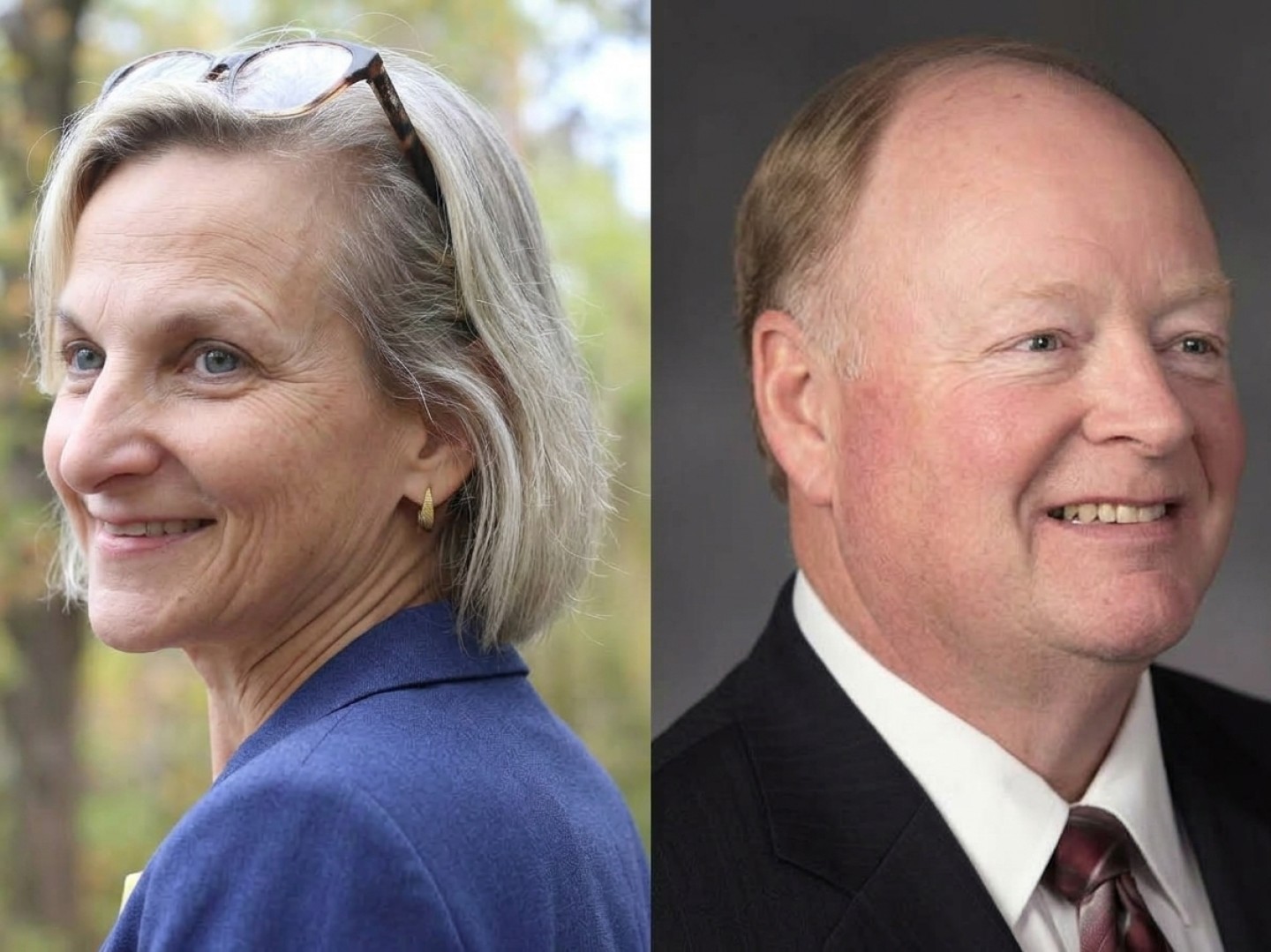
Why do some voters cast ballots that seem to run against their own economic interests? That long-running question is the starting point of a recent opinion column by Spokane resident Norm Luther, who directs the critique at supporters of U.S. Rep. Michael Baumgartner.

Luther recalls his father’s view that many people so strongly dream of joining the wealthy that they identify with them and vote accordingly. In Luther’s telling, that dream should be harder to sustain today: he argues economic mobility has diminished, including through what he calls the billionaire-friendly “One Big Beautiful Bill,” which he says Baumgartner championed. Hard work, Luther writes, may no longer guarantee economic security.

He also points to years of partisan gridlock in Washington, D.C. Luther says longtime Republican Senate leader Mitch McConnell, after vowing to make Democrat Barack Obama a one-term president, opposed measures from Obama and later from Democratic former President Joe Biden that Luther describes as aimed at helping the working class — leaving that class, in his view, justifiably feeling forgotten.

Emotion, not pocketbook math, is Luther’s main explanation for how many voters choose. He contends that many people relate emotionally to President Donald Trump’s angry rhetoric even though, in Luther’s assessment, Trump has not advanced their welfare and — together with congressional Republicans including Baumgartner — has made life harder for them. “Unfortunately, many people vote their emotions, rather than rationally in agreement with their best interests,” Luther writes.

For Baumgartner’s supporters specifically, Luther offers a simpler answer: he believes many have not watched the congressman’s record closely enough to see what Luther calls a sharp gap between what Baumgartner says and how he votes. Luther labels that approach “shrewdly deceitful” — a characterization that is Luther’s opinion, not an established finding.

Luther’s column does not present new legislative vote tallies or independent economic analysis; it is a personal argument about voter psychology and representation in Eastern Washington. Readers seeking the full original text can find it via the source link below.

Sources

Opinion: Half-ton farm pickups may get caught by WA luxury vehicle tax

Editor’s note: The following is based on an opinion column from the Washington Policy Center, republished by Franklin Connection. It reflects the author’s policy analysis and recommendations, not a ConnellWA.com news investigation.

For many North Franklin farm and ranch families, the pickup in the yard is less a status symbol than a rolling toolbox — dusty paperwork, ball caps, baling twine, and field dirt included. An agriculture policy analyst at the Washington Policy Center argues that when it’s time to replace that truck, Washington’s relatively new “luxury” motor vehicle tax could treat some everyday half-ton work pickups like luxury cars.

According to the Washington State Department of Revenue, the state began collecting an additional 8% luxury motor vehicle tax on Jan. 1, 2026, on the portion of a new or used vehicle’s selling price (or lease fair market value) above a deduction that started at $100,000. The tax stacks on top of regular retail sales tax and motor vehicle sales/use tax. The deduction amount rises 2% each July 1; for July 1, 2026, through June 30, 2027, DOR lists it at $102,000.

DOR and state law list several exemptions, including commercial motor vehicles, motor vehicles with a gross vehicle weight rating greater than 10,000 pounds (other than motor homes), and farm tractors or farm vehicles as defined in state statute — unless used in cannabis production.

In an August 2026 column, Pam Lewison, director of agriculture policy at the Washington Policy Center, says the rub for many producers is that they no longer rely only on heavier three-quarter- and one-ton diesels for daily work. Half-ton pickups, she writes, are often preferred for fuel economy and getting into tougher field spots — and many of those trucks sit under the 10,000-pound weight line while carrying sticker prices that can push past the luxury-tax threshold before tax, title, and license.

Lewison’s view is that those trucks function as both daily drivers and farm tools, not luxuries. She recommends the Legislature amend the tax — for example by lowering the weight exemption bar to about 7,500 pounds and/or raising the price threshold toward $150,000 — so more common half-ton farm work trucks are less likely to be swept in. Those figures and proposed changes are her recommendations, not current law.

Local growers and ranchers shopping for a replacement pickup may want to confirm with a dealer or tax professional how weight rating, farm-vehicle definitions, and price interact before signing — especially if the truck is a lighter half-ton configured more like a dual-use daily driver than a CDL-class commercial truck.

Sources

schmickwallace

Schmick leads Wallace after first day of Aug. 4 primary counting

COLFAX — Incumbent state Rep. Joe Schmick, R-Colfax, held a wide lead over Democratic challenger Karina Wallace after the first day of counting in the Aug. 4 primary and, based on that early tally, appeared headed back to Olympia.

Schmick reported 16,339 votes (64.43%) in the race for Legislative District No. 9, Position No. 2, according to Franklin Connection’s account of the initial ballot count. Wallace had 8,975 votes (33.39%) — a margin of more than 29 percentage points.

That early split was nearly the same as Schmick’s 2024 result against Pam Kohlmeier, a Spokane Democrat, when he finished at 63.92% to her 35.94%, the same reporting noted.

District No. 9, as described in that coverage, includes southern Spokane, Whitman, Lincoln, eastern Adams, eastern Franklin and other counties.

Sources

firefighter-extinguish-fire-extinction-47863

WSP: failure to yield in crash that killed Kahlotus councilman

PASCO — A Kahlotus city councilman was killed Tuesday morning, Nov. 25, in a two-vehicle crash on U.S. Highway 395 about two miles north of Pasco.

Washington State Patrol responded around 6:30 a.m. to the intersection of Highway 395 and Vineyard Drive. Perrie N. Robitaille, 77, of Kahlotus was driving a Hyundai Elantra eastbound on Vineyard when troopers say he failed to yield to northbound traffic. A Hyundai Santa Fe driven by Kalil C. Yandall, 37, of Temecula, Calif., struck Robitaille's car in the intersection.

Both drivers were wearing seat belts. Robitaille was pronounced dead at the scene after troopers tried to revive him. Yandall was taken to a Pasco hospital with injuries described as minor. WSP said failure to yield was the reported cause and had not determined whether drugs or alcohol were involved.

Robitaille had just been returned to Kahlotus City Council Position No. 3 in the Nov. 4 general election, running unopposed and taking about 87% of the vote. He was also the father of Kahlotus Mayor Michael Robitaille.

Fire District 3 urged drivers along the 395 corridor to take extra time before crossing traffic. Apple Valley News Now reported WSP counting this as the 10th fatality in that stretch over five years. The day after the crash, Franklin County commissioners moved to send a letter to state and federal officials seeking help on dangerous 395 intersections north of Pasco, including Vineyard Drive.

Sources

pexels-photo-19305961

Movie films in Sprague

SPRAGUE — Several small towns around the area will be featured in a film to be released next year. The film and production crew for the film “Supermassive” stopped in Sprague, Rosalia and Reardan two weeks ago. “Supermassive” is a road-trip comedy written by Seattle writer and director Steve Utaski. The crew welcomed back many who had worked on the movie “Train Dreams,” which had scenes filmed in nearby Tekoa. Local film production took place over three weeks, Utaski said during an interview last week. “We did use one full day of shooting out in a rural area,” Utaski said of Rosalia, noting the crew used a bridge for a scene in which a character throws a phone. In addition, Utaski said a Rosalia resident allowed the crew to use a driveway for a scene with a tree-lined road. But the crew spent the most time filming in Lincoln County, stopping in Sprague for a total of four days. In addition, the crew filmed at the Speed Trap in Reardan. In the film, the characters go on a road trip and get delayed while waiting to be picked up. “That all took place in Sprague,” he said, noting a lot of shots included walking around town. The crew also shot several scenes near the abandoned truck graveyard and some of the storefronts. “Wonderfully old, dilapidated buildings,” he said of Sprague.

Read full article on Franklin Connection >>


The Franklin Connection is an online news and sports site dedicated to Franklin County, Washington, and the surrounding communities. The publication offers news, marketing, advertising and online services to the residents of Pasco, Basin City, Mesa, Eltopia, Connell, Kahlotus and Burbank.

Volunteer firefighters deserve equal protection

Unquestionably, firefighters are the downright heroes of any community, saving thousands of lives every day. However, a lesser-known fact is that approximately 70% of firefighters are volunteers.

Washington State is no exception.

Local fire departments, especially in rural areas, rely heavily on the dedication of volunteers. Yet, many of them have historically been excluded from the Cancer Presumption Law in many states, including Washington.

The presumption law was designed to acknowledge cancer as a job-related illness for firefighters, making them eligible for compensation or disability benefits. However, in almost half the states, the law only protects career, paid firefighters, leaving volunteers with limited or no support, even though their exposure risks are virtually identical.

This kind of policy is discriminatory and fails to acknowledge reality itself.

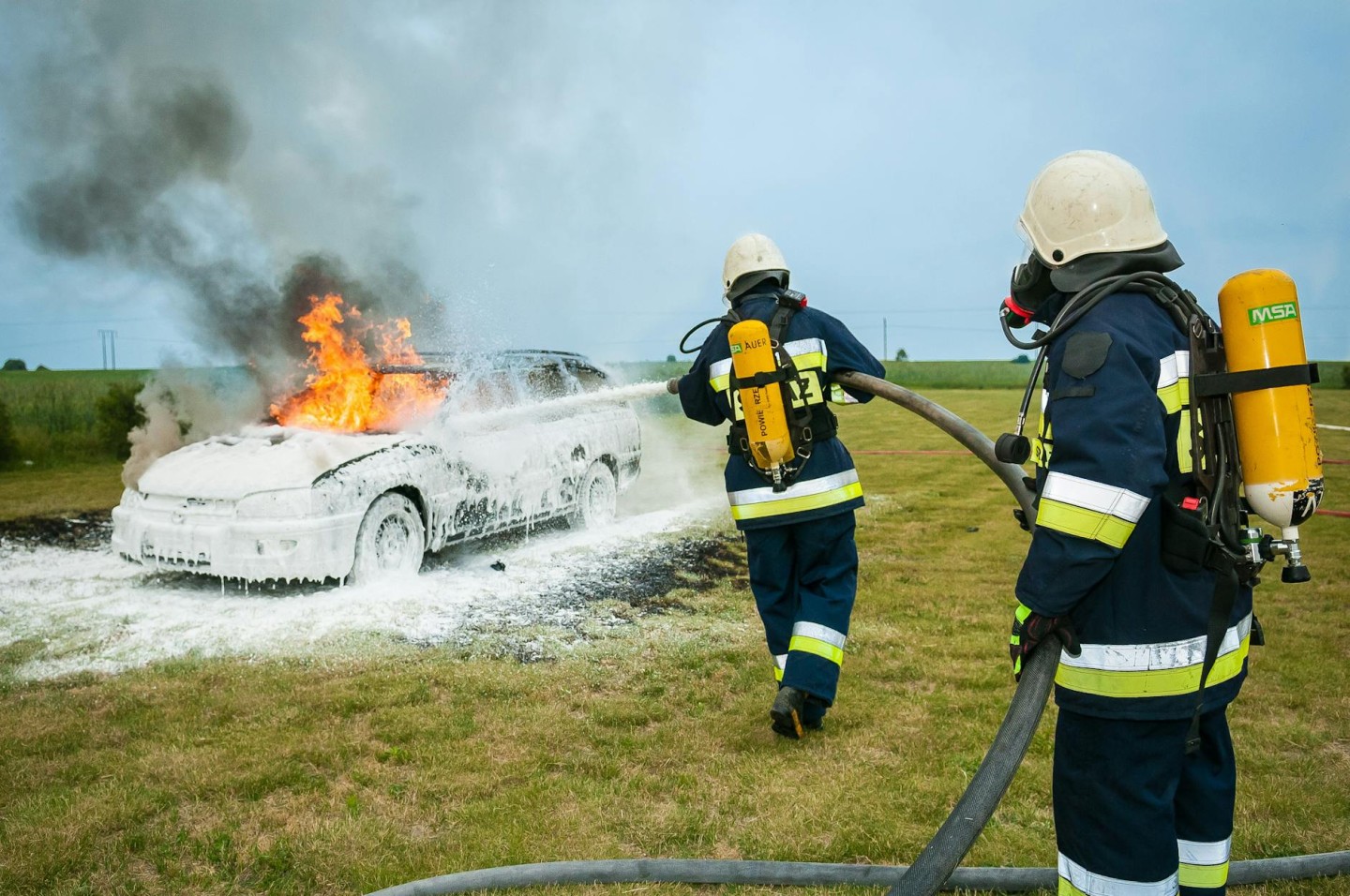
Volunteer firefighters respond to the same emergencies, perform the same tasks, and are exposed to the same toxic hazards as their counterparts. Their risks include heat stress, cardiovascular diseases, life-threatening accidents, and, most importantly, exposure to carcinogenic chemicals.

Among the most concerning are per- and polyfluoroalkyl substances, often referred to as "PFAS," which are present in both turnout gear and the aqueous film-forming foam that has been used by some fire departments and district to extinguish fires.

The military and firefighters have widely used them since the 1960s for combating fuel-based fires. While the chemical substance is very effective for this purpose, it is also dangerously toxic due to its PFAS content.

These so-called "forever chemicals" are water-soluble, persistent in the environment, and accumulate in the human body over time.

Decades of research linked PFAS exposure to critical illnesses, including decreased fertility, liver damage, immune system suppression and high cholesterol. More alarmingly, studies have connected PFAS, to life-threatening cancers like kidney, testicular and ovarian cancers.

Washington State has taken important steps to regulate PFAS in firefighting foams and was one of the first states to ban the sale of PFAS-containing aqueous film-forming foam.

However, airports and facilities that handle fuels are still exempted in exceptional conditions. Moreover, firefighters face toxic exposure from their PFAS-laden turnout gear.

The wear and tear of the protective equipment, combined with sweat and heat typical during interventions or

training, leads to accelerated absorption of the toxic substance through the skin. The risk remains ongoing, especially for volunteer firefighters who have been responding to calls for decades.

According to the National Fire Department Registry, 40% of the fire departments in

Washington state are volunteer-based. Yet, the state's presumption law only includes fulltime employed firefighters for occupational disease coverage, and it doesn't even mention volunteers.

Moreover, the law only covers career firefighters who have served at least 10 years before the cancer diagnosis. Needless to say, the financial burden of cancer treatment is considerably high. Without fair coverage, volunteer firefighters and their families are left without any support and protection.


Read full article on Franklin Connection >>


The Franklin Connection is an online news and sports site dedicated to Franklin County, Washington, and the surrounding communities. The publication offers news, marketing, advertising and online services to the residents of Pasco, Basin City, Mesa, Eltopia, Connell, Kahlotus and Burbank.

pexels-photo-9038226

Study: State's plastic bag ban fails

Washington state’s ban on thin plastic grocery bags is increasing the amount of plastic used by shoppers and overall environmental harm, contrary to the intent of the law.

That is the conclusion of a report from Washington State University researchers prepared for the state departments of Commerce and Ecology. The report notes the law “may not be effective at reducing environmental impacts, as the bags are often not reused, and certainly not reused enough to offset their higher contribution to plastic waste and litter and increased lifecycle costs.”

The report found that although shoppers are using about half the number of bags they did previously, the increased thickness of the bags offsets the reduction in use. That echoes the argument we have been making for many years that bans increase environmental damage.

Studies have routinely found plastic bag bans end up doing more harm than good because shoppers switch to bags that use more energy, water and resources to produce.

Despite the science and data repeatedly demonstrating that the bag ban is harmful, employees at the state Departments of Commerce and Ecology are not happy. They favor the ban and have gone to great lengths to undermine the Washington State University report, adding a lengthy rebuttal to the front of the study explaining all the study’s shortcomings and arguing against its recommendations.

The excuses provided by Commerce and Ecology employees are wonderfully reminiscent of those offered by Sir Humphrey Appleby from the 1980s British TV satire, “Yes Minister.” Sir Humphrey is a bureaucrat in the British government and in an episode that aired in 1981, explains all the ways government agencies can discredit a report they don’t like.

For example, Sir Humphrey explains that an agency can claim a report does not provide “sufficient information on which to base a valid assessment.” Fittingly, the writers of the preamble written by Commerce and Ecology claim the Washington State University study’s conclusions are “based upon insufficient data from within Washington State.”

Sir Humphrey also explains that bureaucrats can claim that “much of the evidence is inconclusive.” Obligingly, Commerce and Ecology employees write, “the lack of robust available data limits the report’s ability to present a comprehensive view” on how the ban is working.

Additionally, a report can fail, explains Sir Humphrey, because “it leaves important questions unanswered.”

What kind of questions? Commerce and Ecology employees note the university study fails “to consider larger social, economic and environmental implications.” What are those implications?

The agencies’ employees don’t explain how they would be balanced against the conclusions in the report.

The fact that Washington State University researchers were not asked to examine those considerations is immaterial. Those questions remain unanswered, undermining the utility of the study as a basis for decision-making.

The state’s preamble acknowledges that “Without sufficient reuse, reusable carryout bags made of paper, plastic, or fabric have higher environmental lifecycle costs than their single-use counterparts.”

This admission directly contradicts one of the claims made in the intent section of the law that claims, “Alternatives to single-use plastic carryout bags are convenient, functional, widely available and measure as superior across most environmental performance metrics.

Alternatives to single-use plastic carryout bags feature especially superior environmental performance with respect to litter and marine debris, since plastic bags do not biodegrade.” This study — among others — demonstrates this is not accurate and Commerce and Ecology staff seem to agree.

Left with a study showing the current policy increases environmental damage, what do agency employees recommend changing? They support keeping the bags at the current thickness.

Meanwhile, researchers suggest eliminating the thickness requirement.

Agency bureaucrats claim changes in the law should focus on “equity impacts rather than considering only environmental costs.” How will they measure equity and environmental justice impacts against the data showing environmental harm? They can’t. They are just vague slogans that can be used to come to any conclusion agency staff prefer.

The agencies’ preamble is a perfect example of how government bureaucrats undermine studies they don’t like.

In the meantime, however, Washington’s law on plastic grocery bags will continue to increase environmental damage – the very opposite of what was claimed when the law was adopted.

— Todd Myers is the Washington Policy Center’s vice president for research. Email him at tmyers@washingtonpolicy.org


Read full article on Franklin Connection >>


The Franklin Connection is an online news and sports site dedicated to Franklin County, Washington, and the surrounding communities. The publication offers news, marketing, advertising and online services to the residents of Pasco, Basin City, Mesa, Eltopia, Connell, Kahlotus and Burbank.

create-a-highly-detailed-high-resolution-image-that-embodies-the-tension

Under fire: Democrats took aim at gun rights in 2025 session

As a leading advocate for Second Amendment rights, I must tell you the 2025 legislative session illuminated an undeniable truth: Our colleagues in Olympia’s majority party do not respect our gun rights and are determined to dismantle them.

While we repelled some outrageous attacks, a dangerous precedent has been set. Your constitutional freedoms now hang in the balance.

We saw aggressive attempts to expand “gun-free zones” and impose new taxes on responsible firearm owners. These flawed ideas would do nothing for public safety while unquestionably limiting the ability of law-abiding Washingtonians to exercise their rights.

Working together, and with the much-appreciated support of the thousands who weighed in during committee hearings, we defeated many egregious proposals. Still, one deeply troubling measure regrettably became law: House Bill 1163, which directly betrays the trust you place in lawmakers to protect your freedoms.

When it takes effect in May 2027, this new law means responsible gun owners will face an unnecessary and unconstitutional hurdle to purchase a firearm. You'll need a state-issued permit, requiring a certified training course that includes live-fire exercises. This training simply doesn't exist at the scale needed across our state, effectively blocking gun ownership.


Read full article on Franklin Connection >>


The Franklin Connection is an online news and sports site dedicated to Franklin County, Washington, and the surrounding communities. The publication offers news, marketing, advertising and online services to the residents of Pasco, Basin City, Mesa, Eltopia, Connell, Kahlotus and Burbank.

maxresdefault[1]

State Senator Mark Schoesler DUI plea

SUMMARY

Washington State Senator Mark Schoesler was recently arrested for driving under the influence (DUI) following an event at the Ritzville Rodeo on August 31, 2024. The 67-year-old senator, who represents the 9th Legislative District, was found to have a blood alcohol level of 0.14, well above the state's legal limit of 0.08. According to reports, Schoesler was seen walking unsteadily after the rodeo, prompting a witness to report a possible drunk driver. He later allegedly backed his vehicle into two others before being stopped by law enforcement.

The senator cooperated fully with the authorities during the incident, but after failing a field sobriety test and several breathalyzer tests, he was arrested by citation. Since the local jail was closed, Schoesler was released to a family member and will face a court summons in Adams County. This arrest has drawn attention given Schoesler's long tenure in Washington politics, where he has served in both the House and Senate, including a role as Senate Republican leader for eight years.

The arrest marked one of the few major incidents at the Wheat Land Communities Fair and has led to scrutiny of Schoesler’s actions, though his full legal consequences will be determined in the upcoming court hearings.

Sources: Whitman County Gazette, Franklin Connection

Summary provided as an archive of the information in the case that the original article is unavailable.

FRANKLIN CONNECTION

RITZVILLE – The 9th Legislative District senator pleaded not guilty Thursday, Sept. 12, on a charge of driving while under the influence of alcohol. But Adams County District Court Judge Andrea K. Russell determined there was probable cause for the charge against 67-year-old Sen. Mark Schoesler, R-Ritzville. She schedule him to appear before her again Oct. 8 in the 210 W. Broadway Ave. courthouse...
 

Read full article on Franklin Connection >>


The Franklin Connection is an online news and sports site dedicated to Franklin County, Washington, and the surrounding communities. The publication offers news, marketing, advertising and online services to the residents of Pasco, Basin City, Mesa, Eltopia, Connell, Kahlotus and Burbank.

default

Franklin County Auditor cleared of allegations

SUMMARY

Franklin County Auditor Matt Beaton Cleared in Investigation Alleging Wrongdoing

Franklin County Auditor Matt Beaton has been officially cleared of any misconduct following an investigation that many have called politically motivated. The probe, led by Snohomish County Special Prosecutor Elise Deschenes, was initiated after Beaton raised concerns over a $12,500 payment made to a management company overseeing the HAPO Center in Pasco. The payment, pushed through by former county administrator Mike Gonzalez, bypassed normal county procedures, prompting Beaton and other officials to withhold it for further scrutiny.

Gonzalez, who resigned shortly after to take a position in Sunnyside, filed a formal complaint against Beaton and others, claiming misuse of power. The timing of the complaint — coinciding with local election filings — led some to speculate that the investigation was designed to undermine Beaton’s credibility.

After a thorough review, the special prosecutor found no legal violations in Beaton’s actions. Beaton has maintained that the complaint was rooted in false claims and political maneuvering. His attorney, Scott Johnson, described the case as a "baseless effort to discredit a public servant committed to upholding transparency."

Beaton, who has served as Franklin County Auditor since 2011, reiterated his commitment to protecting taxpayer dollars and holding officials accountable for responsible fiscal management. The case may have closed in Beaton’s favor, but it shines a light on the increasingly political nature of local government affairs in Franklin County.

Summary provided as an archive of the information in the case that the original article is unavailable.

FRANKLIN CONNECTION

PASCO - Franklin County Auditor Matt Beaton has been cleared of any wrongdoing following a "politically motivated investigation." Attorney Scott W. Johnson of Johnson & Orr in Richland confirmed in a press release Sept. 6 that Snohomish County Special Prosecutor Elise Deschenes rendered an independent decision finding no violation of the law. Records show the investigation was...

Read full article on Franklin Connection >>


The Franklin Connection is an online news and sports site dedicated to Franklin County, Washington, and the surrounding communities. The publication offers news, marketing, advertising and online services to the residents of Pasco, Basin City, Mesa, Eltopia, Connell, Kahlotus and Burbank.


Copyright 2002-2026 CONNELLWA.COM

All Rights Reserved.

BEVON DAVIS, EDITOR

IN COOPERATION WITH GCACC

Contact Info

PO BOX 156 Connell, WA