Gas holds above $5 in Connell and Tri-Cities as state prices ease slightly

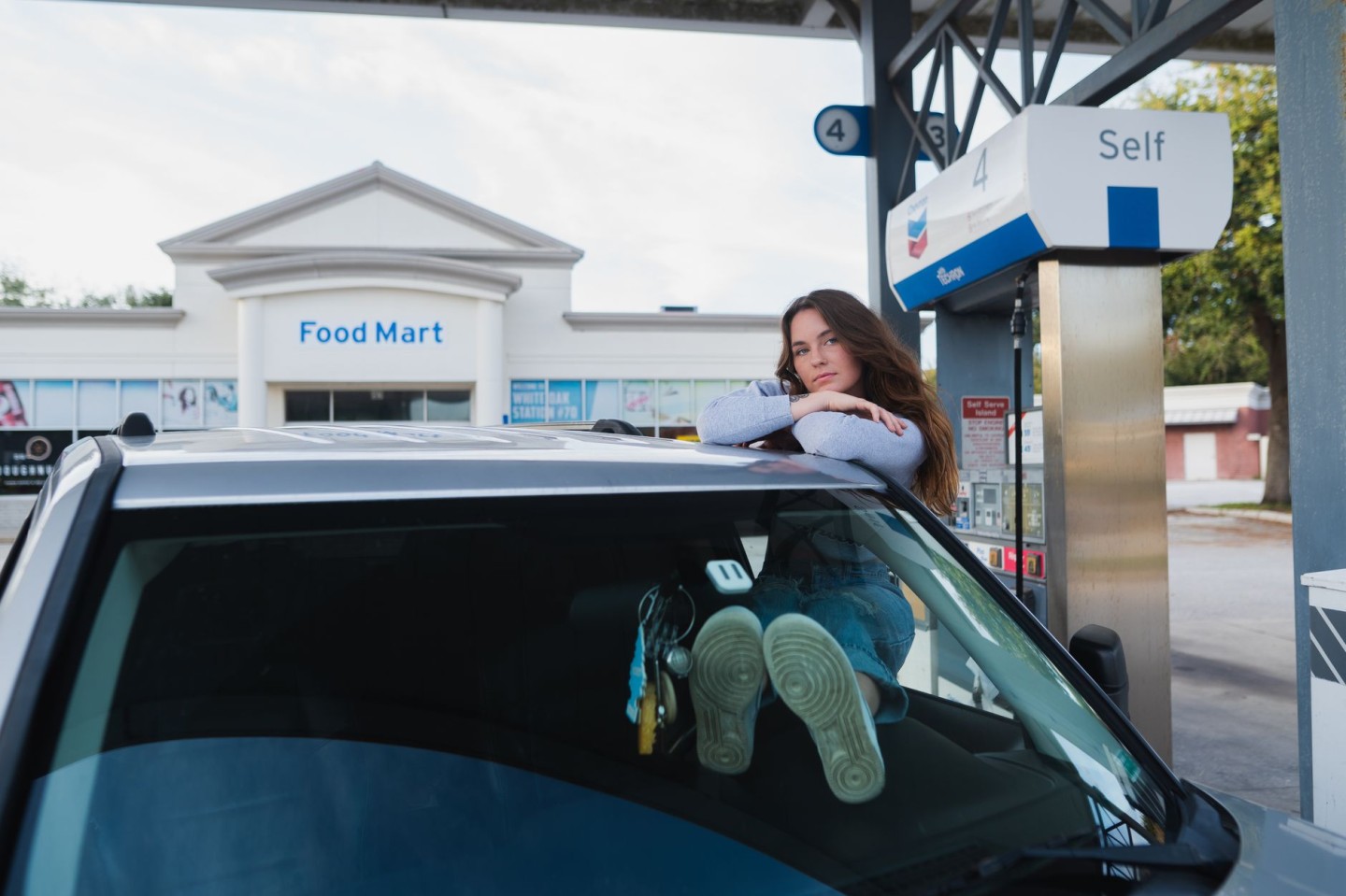
Gas is still over $5 a gallon across most of the Columbia Basin. Pasco and Connell have some of the region's better deals, but the cheapest fill-ups are across the border in Idaho.

GasBuddy's lowest regular prices at 10 a.m. Monday, Oct. 5: $5.13 at Circle K in Connell, $4.99 at Atomic Gas and MetroPetroleum in Pasco, $5.19 at Hawk Fuel in Othello, $4.83 at Chevron in Moses Lake, $5.19 at Maverik in Cheney and $5.39 in Colfax. Post Falls, Idaho, was $4.35 at Walmart.

Averages tell a broader story. AAA put the Richland-Kennewick-Pasco metro at $5.31 a gallon on Oct. 12, flat for the week but $1.04 higher than a year ago. Diesel there averaged $7.34.

Adams County averaged $5.37 and Grant County $5.40 on Oct. 12, according to AAA. The statewide average was $5.45, down 3 cents in a week and 11 cents in a month. The national average was $4.36.

Washington ranks third-highest in the nation behind California and Hawaii. Regular gas hit a state record of $5.79 on May 20, and diesel set a record of $7.47 on Sept. 23. A year ago, Washington drivers paid about $4.48.

GasBuddy analyst Patrick De Haan said the trend is "cautiously in the right direction," but warned that hurricane season and geopolitical uncertainty mean it's too early to call the pressure over.

Sources

Tip leads to firearm arrest in Othello graffiti case

A 26-year-old Othello man is facing firearm and vandalism charges after a neighbor's 911 call about someone spray-painting a fence led deputies to him later the same day, according to the Adams County Sheriff's Office.

The tip came in Oct. 1 from a resident who saw a man putting graffiti on a fence near West June Street and South Andes Road, just west of Othello. The man left before deputies got there, but the caller had photographed his vehicle and gave deputies a description.

That evening, deputies went to help Othello police with a separate graffiti report at PJ Taggares Park. They learned the same vehicle had been at the park. Othello police arrested a juvenile in connection with the park incident.

Later that night, Othello officers spotted the vehicle inside city limits and called deputies. Deputies contacted the driver, Dario Ochoa Jr., who matched the description from the first call, Sheriff Dale Wagner said in a media release.

While Ochoa was detained, deputies found a gun on him. Wagner said Ochoa has a felony conviction and is barred from having firearms.

Ochoa was booked Oct. 2 on suspicion of unlawful possession of a firearm and third-degree malicious mischief. The sheriff's office said the investigation is still open.

Sources

Underground transportation in Nashville outpaces Vegas tunnels

Two tunnel-boring machines are digging The Boring Company’s Music City Loop under Nashville, and the company still has not said how far they have gone or when a passenger can board. The project is a private, all-electric shuttle: Tesla vehicles in twin one-way tunnels, meant to run from the airport and downtown out toward West End without stopping at every station in between. On the company’s own project page, marked last updated Aug. 14, 2026, tunneling is underway. That page does not give a first-ride date.

The date has already moved. When the state and The Boring Company announced the idea on July 28, 2025, the company’s release said the first segment could be operating as soon as spring 2026. A line at the top of that same release said initial legs could be operating as soon as the fourth quarter of 2026. On Feb. 25, 2026, after the Tennessee Department of Transportation and the Federal Highway Administration approved a lease and grading permit for state right-of-way, Gov. Bill Lee’s office said the first segment was expected by the end of 2026. Associated Press, reporting the Metro Council vote on March 4, said the first section was supposed to be operational in the first quarter of 2027. The Aug. 14 company page, the latest passenger-facing description opened for this story, drops the date entirely.

The route has grown on paper. The July 2025 company announcement described an initial phase of about 10 miles, downtown and the convention center to Nashville International Airport, with a stated trip of about 8 minutes, under state roads, at no cost to taxpayers. AP later described an initial 13-mile airport-to-downtown stretch that was expanded to about 25 miles, including a second leg west of downtown. The current company page says the system spans almost 25 miles and would take about 10 minutes from the airport to Lower Broadway. The airport alignment, as the company draws it, starts at a launch site called Lot 16 near the state Capitol, runs south and then out Murfreesboro Pike and Donelson Pike, and ends within 100 feet of the airport. The Broadway alignment runs from Lower Broadway along West End Avenue, past Centennial Park and Vanderbilt University, and stops near Interstate 440. The Feb. 25 state approval, the company wrote on Aug. 1, authorized 25 miles of tunnel inside TDOT right-of-way. That is permitted length, not tunnel already dug.

What is in the ground is narrower than the map. The company’s Aug. 1 construction note says Prufrock-MB1 and Prufrock-MB2 were both tunneling from Lot 16, and that a third machine, Prufrock-MB3, was on track to arrive in Nashville in September. It also said core samples were showing rock at about 14,000 pounds per square inch, which the company called excellent tunneling rock, and that more than 40 stations were in some stage of planning or design. LOOP Nashville, writing Sept. 11 after reading the company’s April, June, and August notes and its Sept. 9 financing announcement, said those materials still did not give a cumulative footage or mileage for either machine. As of that Sept. 9 announcement, LOOP Nashville wrote, the third machine was still in final assembly in Bastrop, Texas, for shipment, not yet described as digging. The 25-mile figure should not be read as miles finished.

On Sept. 9, 2026, The Boring Company announced a $3 billion Series D led by the United Arab Emirates and affiliated entities, at a stated valuation of $23 billion, according to Tunneling Online, which said it was quoting a release then posted on the company site. The trade magazine said the round was also tied to a much larger tunnel buildout in the UAE, separate from the Dubai Loop contract, and that the company described Music City Loop as its first hard-rock project, with two machines mining in Nashville by August. The company’s public “series-d” web address returned a not-found page when checked for this story, so those figures are from the trade account of the release, not from a live company page opened here. Tunneling Online did not report a Nashville share of the $3 billion, or a new opening date.

Stations that have been named are still mostly agreements, not open platforms. The Aug. 1 company note says the Metropolitan Nashville Airport Authority voted 8–0 for a connection and a station, with design and permitting still underway, and that the Music City Convention Center Authority voted 8–0 for a tunnel easement. WKRN reported May 6 that the company had a first residential deal for three Church Street buildings, Alcove, Prime, and Paramount: residents would take an elevator to a station, then a Tesla, with the company putting the airport about nine minutes away and Lower Broadway about two. The Aug. 1 note adds that the company and the JW Marriott had agreed to terms for a station for hotel guests. AP, in March, said more than 30 stations were being designed. Those reports describe agreements and design work, not stations that are open.

Riders, if the system opens as described, would not be on a train. The company says the vehicles will be a dedicated Tesla fleet, initially Model Ys and Model Xs, driven at first by trained “Loop drivers,” with autonomy something it may explore later. Passengers would go to one chosen station and skip the ones in between. Tickets would be bought in an app or with a QR code. Fares are not set. The company says they are expected to be lower than other options, “as in Las Vegas.” The National, writing March 12, 2026, reported Vegas Loop prices of $4.25 for an ordinary one-way ride, $7 for a round trip that does not start at the airport, $12.50 for a day pass, and $12 from an airport station. The company says Nashville tunnels are aimed at about 30 feet down, with a 12-foot internal diameter, and that the project cost is expected to be a few hundred million dollars, paid by the company, not by taxpayers. AP’s March account matches the “no taxpayer bill” claim and adds a limit on it: the state was providing free use of some land near the Capitol.

Nashville’s elected council does not control the dig. On March 3, 2026, Metro Council voted 20–15, with two abstentions, for a nonbinding resolution opposing the Music City Loop. AP said the resolution cannot make the company stop, stall, or change the plan. Sponsor Delishia Porterfield told colleagues that “public land needs to be for public good.” The resolution, as WSMV quoted it, says residents were not meaningfully consulted about a project on public land with environmental, geological, and safety consequences, and it condemns what the council called a lack of transparency and troubling labor and safety practices. Council member John Rutherford, who voted no, said it would be easy to support the resolution, “but sometimes to do what is best for Nashville, we have to do what is hard,” because the project was going ahead anyway. WSMV reported that tunneling was announced the same day as the state’s Feb. 25 permit. The Nashville Banner reported that a company vice president, David Buss, had told a Bordeaux community meeting the machine was then running only “intermittently.”

The legislature later moved jurisdiction up to the state. Senate Bill 2205, the Subterranean Transportation Infrastructure Coordination Act, passed the Senate 26–5 and the House 69–23 on April 13, 2026, with one House member present and not voting. Gov. Lee signed it April 27. It became Public Chapter 854 on May 5. For most purposes it took effect July 1, 2026. The act defines a covered “transit project” as a tunnel or tunnel system, deep enough to avoid interfering with surface uses, for moving passengers or goods inside the state by electric, autonomous, or low-emission vehicles, and not a highway or a conventional mass-transit line in a state highway right-of-way. It gives the state exclusive jurisdiction over subsurface construction of those projects, including state fire marshal permits, and it creates a state authority that can hear appeals when a city or a utility says no. Cities keep authority over ordinary surface construction. They do not, under the act, regulate the tunnels, the stations, the portals, or the ventilation and electrical systems that belong to the project. A city also may not adopt a rule that effectively bans the project.

Lee’s Feb. 25 statement welcomed that state role. “Tennessee continues to lead the nation in finding innovative solutions to accommodate growth, and in partnership with The Boring Company, we are exploring possibilities we couldn’t achieve on our own,” he said. He credited TDOT with an approach that “will define the future of transportation in our state and beyond.” Steve Davis, identified by the governor’s office as president of The Boring Company, said agencies had brought the project “to a shovel-ready point,” and called Music City Loop “a safe, fast, and fun public transportation system.” U.S. Transportation Secretary Sean Duffy, in the same release, called the lease a step toward less congestion. The release does not say the loop is months from opening. As of the records opened for this story, two machines are digging, a third had not been confirmed on site in the September notes reviewed, more than 40 stations are still in design, and no published count of finished tunnel sits next to the 25-mile plan.

Sources

Humanoid robots are closer than you think

A YouTube video published Oct. 2, 2026, argues that humanoid robots and what its host calls “physical” artificial intelligence will matter more than doomsday AI headlines. Farzad Mesbahi, on the channel Farzad, points to Tesla’s Cybercab in Austin, Tesla’s Optimus robot, and a Chinese automaker’s humanoid walking off a production line. Independent reporting confirms a limited steering-wheel-free Cybercab service and a real shift of Fremont factory space from the Model S and Model X to Optimus. It does not confirm that general-purpose humanoid labor is already here, or that anyone can fly into Austin and hail a cheaper-than-Uber Cybercab.

The video is about 17 minutes. Mesbahi says AI-lab warnings that “we’re all going to die,” government efforts to ban AI, and a U.S.–China race are a distraction. “We’re not all going to die,” he says. He tells viewers the shift is early, that he is not giving financial advice, and that people could respond by buying a robot, trying not to be displaced by one, or investing in companies and supply chains building the hardware. His channel description says he worked at Tesla from 2017 through 2021 in distribution and supply chain, has owned Tesla stock since 2012, and also holds SpaceX, NVIDIA, Meta, and Lemonade shares. The description says nothing he says is investment advice. The video includes a paid Bolt.new sponsorship.

He plays a clip he attributes to All-In podcast host Jason Calacanis. In the auto-captions, Calacanis says he has seen the latest Optimus videos, that Elon Musk is “not publishing publicly,” that he asked whether a clip was “CGI or … real,” and that Musk said, “No, this is real.” The clip ends with Calacanis saying, “Optimus will be the bestselling, I think, product of all time.” This draft did not independently transcribe that All-In segment. The name is spelled “Calcanis” in YouTube’s automatic captions.

On Tesla, Mesbahi says the Cybercab “was released in Austin a couple weeks ago as of the date of this recording,” has no steering wheel or pedals, and is the same kind of real-world AI he expects humanoids to use. He says he thinks Tesla has “harvested … over 14 billion miles” of customer driving and that “literally anybody” can fly into Austin, use Tesla’s robotaxi app, and hail a Cybercab for “a little bit less than an Uber,” though he adds that demand has pushed prices up and there are not enough Cybercabs.

Associated Press reporting matches the core vehicle claim and not the open-access fare claim. AP reported that on Thursday, Sept. 3, 2026, Tesla put dozens of gold Cybercabs without steering wheels or brake pedals on Austin streets. Passengers have no way to take control in an emergency. AP described an invitation-only launch event that day and said it was unclear how soon a broad Cybercab service would roll out. Austin already had a Tesla robotaxi service using cars that still have steering wheels and pedals, dating to June 2025. AP, citing the monitoring site RobotaxiTracker, reported Tesla had more than 200 “unsupervised” robotaxis across Austin and five other cities in Texas and Florida, compared with more than 4,000 Waymo vehicles in 14 cities. A Pew Research Center survey in February, AP reported, found seven in 10 U.S. adults were “not too” or “not at all” comfortable riding in a driverless car.

The Verge later reported that paid Cybercab rides were underway inside a geofenced area of Austin, in a two-seater with no steering wheel or pedals. It described long waits, butterfly-door issues, and awkward drop-offs, and said the National Highway Traffic Safety Administration opened an audit query after paid rides began, examining how Tesla certified a car without a steering wheel or pedals under federal safety standards. Tesla did not seek the kind of exemption Zoox pursued, The Verge reported. CBS Austin likewise reported a Sept. 3 deployment through Tesla’s Robotaxi app, two seats and no wheel or pedals, and a following NHTSA audit query rather than a recall. Texas DMV data available to CBS Austin that day showed 45 Cybercabs registered in Texas.

Mesbahi’s “over 14 billion miles” line is his figure (“I think”), and the video treats that driving data as the reason cars no longer need a wheel or pedals. Tesla’s own materials still label Full Self-Driving as supervised driver assistance. This draft did not treat a fan mileage tracker as a source, and it did not find the 14 billion figure stated on the Tesla safety-report page it reviewed. The Austin Cybercab is a separate, limited robotaxi deployment, not proof that customer FSD miles have already produced a general self-driving system.

The video’s other automaker example is XPeng, which the automatic captions render as “Xbang,” “Xpang,” and similar. Mesbahi says the company showed a humanoid that was built and “just walked out of the factory.” XPeng announced on Sept. 7, 2026, that it had commissioned a humanoid production line in Guangzhou and that its IRON robot autonomously walked off the line after assembly. The company said more than 80 percent of core processes are automated, that mass production is scheduled by the end of 2026, that first uses would be its own stores and campuses, and that market launch and deliveries in China and overseas are planned for 2027. Engadget, writing Sept. 22, reported that claim and noted XPeng did not disclose current output, how much testing preceded the walk, a price, or U.S. availability. A robot leaving a line on camera is not the same as a shift of commercial work.

Mesbahi calls Tesla’s Fremont, California, plant the clearest signal. He says Tesla is tearing out the Model S and Model X lines, now discontinued, and using that space for humanoid production, and that XPeng may add robot lines rather than remove car lines. Electrek reported Sept. 25, 2026, citing The Information, that Tesla ended Model S and Model X production in early May and put the Fremont line to work on Optimus, and that output had risen from a few dozen robots a week in small-batch testing in the second quarter to several hundred a week in August. Managers were reportedly aiming for more than 1,000 a week by year-end. Electrek also reported the limits: most units were for internal testing, training, and data collection; factory robots were in tightly controlled areas and programmed for specific tasks; the current V3 robots are not the version Tesla plans to commercialize; hands are still largely hand-assembled; and people familiar with the system told The Information that Optimus still takes days to learn basic tasks and cannot reliably generalize. Electrek wrote that Musk had said in January 2025 that Tesla would build about 10,000 Optimus robots that year and that “several thousand” would be doing useful work by year-end, and that he later said none were doing useful work at Tesla. A promised V3 reveal by mid-2026 still had not happened as of that Sept. 25 story.

The rest of the video is Mesbahi’s economics, not a reported product price. He says batteries, chips, motors, actuators, and cameras already exist in the electric-vehicle supply chain, that new humanoid actuators will start expensive, and that “most financial analysts” expect humanoids under $30,000 within three to five years, less than the average new U.S. car. He then divides a roughly $30,000 robot by working hours, power, maintenance, repairs, and insurance and says labor might cost no more than about $4 an hour in a worst case and closer to $2 an hour on average, if the robot can do what a person can. He says that capability “is just going to happen.” Those dollar figures are his estimates. This draft did not find an independent analyst consensus, published this week, that pins a sub-$30,000 humanoid or a $2-an-hour wage.

He also says Musk has talked about a warehouse of 10,000 humanoid robots learning by trial and error — folding laundry, building a chair — with one robot’s lesson copied in software to the whole fleet. He suggests Tesla should live-stream it. This draft did not find a contemporaneous news report confirming that specific 10,000-robot training warehouse. It should not be confused with the separate “about 10,000 Optimus robots in 2025” production remark Electrek attributed to Musk.

Mesbahi says the short and medium term will bring “massive job disruption,” including college graduates losing work to software agents, and that a later economy will create jobs that do not exist yet, comparing the change to railroads, electricity, and the internet. He says someone among “8 billion people” will build this regardless of any one country’s rules, and he points viewers to two books he says he wrote, “Master Plan” and “Abundance or Collapse.” Those labor and timeline claims are his forecast. He does tell viewers to stay “hesitant and very vigilant” about downsides.

Sources

Judge blocks Washington’s new rules for who can be sheriff

Thurston County Superior Court Judge Christine Schaller on Friday permanently blocked the new rules for who may serve as an elected county sheriff in Washington. The attorney general’s office says it will appeal. The decision does not erase the whole statute. A written order is still expected later this month.

Gov. Bob Ferguson signed Second Substitute Senate Bill 5974 on April 1, 2026. The enrolled act is Chapter 258, Laws of 2026, and the signature line reads 9:35 a.m. The Senate’s final vote, on March 9, was 30–19. The House vote, on March 5, was 54–42, with the Legislature’s bill page listing two members excused. Sen. John Lovick, a Mill Creek Democrat and a former Snohomish County sheriff, was the lead sponsor. The act’s title says it modernizes rules for sheriffs, police chiefs, town marshals, volunteers, and related officers. Most of it was set to take effect April 30. Sections 6, 7, and 10 take effect Jan. 1, 2027.

Sheriffs in Washington are usually elected. King County’s is not. The law required them to meet minimums the state already applied to appointed police chiefs, the Washington State Standard reported: at least five years of law-enforcement experience, no felony or gross misdemeanor conviction, an age of at least 25, and no record of conduct that would get a state peace-officer certification revoked. Candidates would have had to clear a background check. A sheriff who was not already certified would have had nine months after taking office to get that certification from the Criminal Justice Training Commission, down from a year. Failing the new requirements, or losing certification, would be grounds to leave office, with county officials appointing a replacement. The route voters already had, a recall, is rarely used. Final decisions on taking a certification away are made by five-member commission panels, and those decisions can be appealed. In its April accounts, the Standard said the panels include three civilians and two police officials.

On Friday, Schaller said the Legislature may set reasonable qualifications for the office of sheriff, which the state constitution creates, but that several of these went past that line. “The qualifications under Section 9 are so expansive that they cannot be upheld,” she said, according to FOX 13 and KHQ, both of which covered the hearing in Olympia. The Center Square reported that she called the new age rule not narrowly tailored, because it applies to sheriffs and not to other county elected officials. That account also said the five-year experience rule does not apply to a sheriff already in office unless that sheriff runs in another county, and that she said the exemption undercuts the claim that elected and appointed leaders were being held to the same standard. She granted summary judgment against Section 9.

She also threw out the part of the law that would have had the Washington State Patrol decide, by a background check, whether a sheriff candidate met the new tests. The Center Square reported that she called eligibility for public office a judicial job, and said the statute handed it to an executive agency without telling the patrol how to settle a disputed fact, without a required hearing, and without a real path to court review. “There are no set of circumstances where this provision can be constitutionally applied,” she said. On speech, she struck provisions that let the training commission deny or pull a certification based in part on affiliation with “extremist organizations.” “The term extremist does not have a settled meaning,” she said. She called those rules vague and content-based, and said they reached more political speech and association than the state’s interest in public trust required. She also struck a requirement that a sheriff candidate swear, under penalty of perjury, to keep that certification as a condition of holding the office. She compared it to an oath the Washington Supreme Court had already rejected, and said this one was broader.

Not every challenge succeeded. Schaller upheld Section 16, which limits what a person deputized by a sheriff may do unless that person is a certified peace officer. She said the sheriff still has the core power to deputize, and that the Legislature may limit what those deputies do. The Washington State Standard reported that Friday’s ruling does not appear to block the law’s standards for police chiefs, or its limits on law-enforcement volunteers. The cases are not finished on paper. The Center Square reported that the plaintiffs are to send proposed orders to the state by Oct. 15, and that Schaller set a presentation for Oct. 23 at 9 a.m. The Standard said a formal order is expected later this month. Mike Faulk, a spokesperson for Attorney General Nick Brown, said the office will appeal. The statement, given to The Center Square, KHQ, and FOX 13, was: “We respectfully disagree with the judge’s decision. We intend to appeal to defend this important state law.”

Friday’s ruling follows a temporary block from the same judge. On April 29, the day before the law’s main effective date, Schaller stopped much of it from applying to sheriffs so this year’s filing would not run under the new rules. “It is a fundamental right to run for elected office, and to vote for elected office, with very, very few exceptions,” she said then, and she found the Legislature “may have exceeded its constitutional authority.” The state asked the Washington Supreme Court to lift that order. On May 5, Deputy Commissioner Walter Burton refused. He wrote that keeping the older rules in place for the time being did not show the immediate harm that would justify a stay. The Standard reported that sheriffs in 35 of the state’s 39 counties were up for election, and that candidate filing was underway that week.

Two cases produced Friday’s decision. One was brought by four eastern Washington sheriffs: John Nowels of Spokane County, Glenn Blakeslee of Pend Oreille County, Brad Manke of Stevens County, and Ray Maycumber of Ferry County. The other was filed by the Washington State Sheriffs’ Association. The Standard reported that a dozen sheriffs challenged the law. Their lawyer, Mark Lamb, said after the ruling that democracy includes the chance voters will elect someone others dislike, and that the answer is not a commission empowered to remove an official for conduct it finds offensive. Walla Walla County Sheriff Mark Crider, who is retiring this year, said he and other sheriffs were “fairly satisfied,” and that the law “would’ve disenfranchised the voters.” Anne Levinson, a retired judge who helped draft the bill, wrote after the hearing that there is “great harm to the public and in particular to vulnerable individuals if top law enforcement officials are allowed to continue in office after having committed serious misconduct.” In court Friday, Assistant Attorney General Kristen Valore said voters trust sheriffs to do the job, and that the Legislature passed the bill so sheriffs would meet the same basic qualifications as other law-enforcement leaders.

Lovick has framed the bill as accountability. “This legislation is about accountability,” he said in a statement FOX 13 published. “As a former sheriff, I know that trust between law enforcement leaders and the communities they are sworn to protect is built on maintaining the highest standards of professionalism and accountability.” He said leaders would be held to the same standards of conduct they ask of every other officer. KHQ quoted him asking why appointed or elected leaders should not face the standards applied to the people who work for them. Ferguson signed with a reservation about the vacancy process and did not veto that piece. “It’s a serious step when someone’s being removed from office, speaking as an elected official,” he told reporters on April 1. He said he had pressed the sponsors on that point, that he might look at improving the process in the next session, and that he was confident the law could withstand a court challenge. Rep. Roger Goodman, D-Kirkland, who led the bill in the House, said lawmakers had worked to make it constitutional and that he expected it to be upheld.

Sources

Adams County Sheriff’s ‘Taser Tent’ VR booth headed to Ritzville, Othello fairs

RITZVILLE — Fairgoers in Adams County will get a rare chance this month to step into a deputy’s shoes — virtually — when the Adams County Sheriff’s Office brings its “Taser Tent” to the Wheat Land Communities Fair and the Othello Fair.

The tent uses virtual reality headsets to put adults into realistic law-enforcement call scenarios from a deputy’s perspective. Sheriff Dale Wagner has framed the exhibit as more than a gadget demo: a way for residents to see how quickly situations develop, how decisions are made, and why a TASER is treated as a valuable tool for deputies.

“Now is your chance to experience it for yourself,” Wagner said in announcing the Taser Tent. On social media, he added that visitors “will see firsthand how quickly a situation can develop, experience the decision-making process, and gain a better understanding of why the TASER is such a valuable tool for law enforcement.”

“It’s an opportunity for our community to experience situations from a completely different perspective and learn more about the tools, training, and decisions involved in keeping our communities safe,” he said.

Radio coverage of the same announcement described the simulator as the kind of VR training a growing number of law-enforcement agencies use, with participants facing typical call types — such as a prowler or an altercation — then making choices and learning whether those decisions held up. The stated aim is greater public understanding of how challenging those scenarios can be.

When and where

According to the Adams County Sheriff’s Office schedule reported by local papers:

  • Wheat Land Communities Fair — Friday, Sept. 4, 3–7 p.m., 811 E. Main Ave., Ritzville
  • Othello Fair — Friday and Saturday, Sept. 18–19, 1–7 p.m., Othello Fairgrounds, 1990 Fairgrounds Road

Each simulation lasts about 30 minutes and can include up to four adult participants. The experience is limited to people 18 and older. Space is limited, and reservations are required.

Wagner advised fairgoers to stop by the Adams County Sheriff’s Office booth at the fair to book a time, then return for the scheduled slot. “Come see something new at the fair, meet members of your Sheriff’s Office, and experience a side of law enforcement you normally don’t get the opportunity to see,” he said.

Sources

sddefault

Connell's Camp Outlook - History

Explore the 30-year regulatory, legal, and operational history of the facility in Connell, Washington, detailing its transition from the "Second Chance" juvenile rehabilitation camp to Helios Nursery’s H-2A farmworker housing.

20150520_113452_hdr[1]

Small Town, Big Impact: A Treatment Counselor’s Perspective

Article Summary

The author reflects on their work as a government treatment counselor alongside colleagues Meghan and Patti at Camp Outlook in Connell, Washington. They describe the deep rewards of guiding youth through difficult mistakes and witnessing their long-term transformation—highlighted by a chance reunion with a former 13-year-old participant who grew up to turn his life around.

In addition to its role as the home of Camp Outlook, Connell is featured as a welcoming small town (population ~5,000) with impressive athletic fields, main street murals and sculptures, and popular community gatherings like the September Fall Festival and November Wine and Brew Festival.

See Full Article >>

Pasco man, passenger hospitalized after Highway 240 SUV rollover near Columbia Park

KENNEWICK — A Pasco man and his passenger were hospitalized after a westbound SUV crossed the median and rolled on state Highway 240 near Columbia Park on Thursday afternoon, Aug. 6, according to the Washington State Patrol and court documents cited by local reporting.

Garnet S. Willis, 57, of Pasco, was driving a 2003 Dodge Durango when the vehicle went into the median and flipped alongside Columbia Park, the patrol reported. His passenger, Justice N. Davis, 25, of Richland, was also taken to the hospital. Both were transported to Kadlec Regional Medical Center.

Dispatch reports described the Durango rolling five times before ending up on the other side of the median near the park entrance shortly before 4 p.m., according to Tri-City Herald coverage. Afternoon traffic was disrupted; one eastbound lane was closed for a time, and the Washington State Department of Transportation said conditions were back to normal by about 5:30 p.m.

Benton County deputies found Willis and Davis outside the SUV, court documents said. Willis told a deputy he did not know how the crash happened and also claimed he was not the driver, according to those documents. A witness reported that the Durango had been speeding before it crossed the median and that Willis was in the driver’s seat.

The Washington State Patrol took over the crash investigation. The patrol’s initial account said drugs and/or alcohol were a factor and that the cause remained under investigation. Willis was not wearing a seat belt and faced possible charges; Davis was wearing a seat belt, the patrol reported.

Court documents later cited by the Tri-City Herald said Willis had lethargic speech and movement, with pupils that appeared very dilated and cloudy — findings a trooper noted as unusual on a sunny, bright day. Willis refused an examination to determine whether he was intoxicated. A drug recognition expert believed he was under the influence of a stimulant, the documents said.

Davis suffered multiple vertebral fractures and a broken ankle, according to the court-document reporting. Willis pleaded not guilty — described in that coverage as an innocent plea — to one count of vehicular assault in Benton County Superior Court and was being held in the Benton County jail on $50,000 bail.

The same reporting said Willis also faced a separate Franklin County Superior Court matter from June 17, in which he allegedly ran from a state trooper near 10th Avenue and Ainsworth Street in Pasco and had been out on $5,000 bond in that case. Older prior convictions were noted as mostly at least two decades old.

Sources

772904973_1976093999764048_6624349718085020673_n copy

TRAC as a Casino in Pasco?

Yakama leaders hear Franklin County possible Pasco casino proposal

By Ronnie Washines

--Yakama Nation Review

TOPPENISH, Wash. – Franklin County officials sent a representative Aug. 4 to present an idea for the Yakama Tribal Council to consider moving forward with to open a casino in Pasco, Wash.

Franklin County Administrator Brian R. Dansel told the tribal council that the county is willing to enter into a partnership with the Yakama Nation to turn its HAPO Center into a tribal casino.

“Pasco is a prime location for a casino,” he said.

The 85,000 square foot HAPO Center largest venues are currently a 39,000 square foot exposition hall and 43,000 square foot arena, which are separated by an atrium containing conference rooms, office space and restrooms.

In comparison, the Yakama Legends Casino gaming area is currently 87,000 square feet.

The HAPO Center campus also includes an ice pavilion and an RV park.

Franklin County and the City of Pasco had a 30-year partnership agreement to operate the facility, which included adjacent sports fields, which the county is currently in separate negotiations. That pact expired last May and Franklin County Commissioners voted to take full control of it all.

Since then, the county has been exploring new uses for the facilities, thus bringing them to the Yakama Nation.

See Full Post >>

HAPO CENTER UPDATE

--Pasco City Councilman Leo Perales

City’s Role:

Under the current agreement, the City of Pasco and Franklin County are each responsible for 50% of operating costs that exceed HAPO Center revenues. The City has averaged approximately $188,000 per year toward its share of those costs.

The HAPO Center is currently operated by Harris-White-Leasure Group under a third-party management agreement with Franklin County. The City of Pasco does not manage the day-to-day operations of the facility.

The City also participates on the HAPO Center Advisory Board. However, the board has very limited practical authority. Meetings largely consist of updates and discussions regarding current events, operations, and revenues at the HAPO Center, rather than making decisions regarding the facility.

HAPO Center Agreement:

The lease expired after December 2025. The City and County have been discussing their future roles and what a partnership could look like going forward, but the City has received very little communication from the County regarding its intentions.

Franklin County recently sent a brief letter invoking a provision in the original TRAC agreement that provides for the County to pay the City of Pasco $1 for the City’s interest in the remaining property upon termination of the agreement. The County included a $1 check with the letter.

My interpretation: The $1 is not intended to represent the value of the HAPO Center. Rather, it appears to serve as the contractual mechanism for resolving the City’s interest in the property under the original agreement.

Softball Complex:

The City has provided Franklin County with a proposed lease extension for the softball fields and has not received a response.

The City is also still awaiting a response from the County Commission regarding the City’s second offer to purchase the softball complex. That offer was valid for 45 days, and nearly two months have now passed without a response.

Potential Tribal Casino:

On August 4, a representative of Franklin County made an introductory presentation to the Yakama Tribal Council regarding the possibility of developing the HAPO Center into a tribal casino.

There are obviously many questions about what happens next. I’ll continue sharing information with the public as we learn more about the County’s plans and what they could mean for the HAPO Center, the softball complex, and the City of Pasco.

Franklin County says:

Transcript — Franklin County Two-Minute Memo - Episode 3 - Aug 14, 2026
Speaker: Brian Danzel, Franklin County Administrator

"Hi, I'm Brian Danzel, Franklin County Administrator, and welcome to Episode 3 of the Franklin County Two-Minute Memo.

I wanted to take a minute to address some of the public interest and rumors we've been hearing about the Hapo Center facility.

We were asked to give an introductory presentation to the Yakama Tribal Council regarding the Hapo Center. That presentation was informal. There were no decisions made, no agreements signed, and there is no final deal.

If there were any future action regarding the Hapo Center, it would have to come before an open public meeting with public input.

For some historical context, the land the Hapo Center sits on was part of territories prior to the 1855 Treaty that included the Yakama Nation.

This kind of communication is routine. It's similar to the City of Pasco welcoming the Confederated Tribes of the Colville Reservation into their chambers. It's just routine local and tribal communication.

I also want to directly address a narrative that's been circulating — that the county is planning to put a casino at the Hapo Center. That is not true.

We appreciate the questions. Please keep asking them in the comments or by email, and we look forward to doing more of these memos in the future."

Tri-Cities Area Journal of Business

August 16, 2026

Ty Beaver

Franklin County’s administrator recently spoke with the Confederated Tribes and Bands of the Yakama Nation about transforming the Pasco’s HAPO Center into a tribal casino, saying if there’s any tribe the county should be talking to, it’s the Yakamas.

Brian Dansel made a presentation to the Yakama Tribal Council on Aug. 4 pitching the opportunity for a partnership with Franklin County to pursue the proposal at the events venue, according to the Toppenish-based tribal newspaper Yakama Nation Review. 

Dansel said in a Franklin County social media post that the county was asked by the Yakamas for the presentation and that multiple parties are interested in the HAPO Center property. “We have supplied materials to all the different entities that are interested in the HAPO Center,” he said, noting that no decisions, deals or agreements have been made with the tribe.

The county has recently asserted ownership of the facility and the adjacent Pasco Sports Complex after its contract expired with the city of Pasco.

See full article >>


Copyright 2002-2026 CONNELLWA.COM

All Rights Reserved.

BEVON DAVIS, EDITOR

IN COOPERATION WITH GCACC

Contact Info

PO BOX 156 Connell, WA