servicevacuum

What Is a Comprehensive Plan to a small town?

CONNELLWA.COM Staff

January 29, 2026

CONNELL, WA -

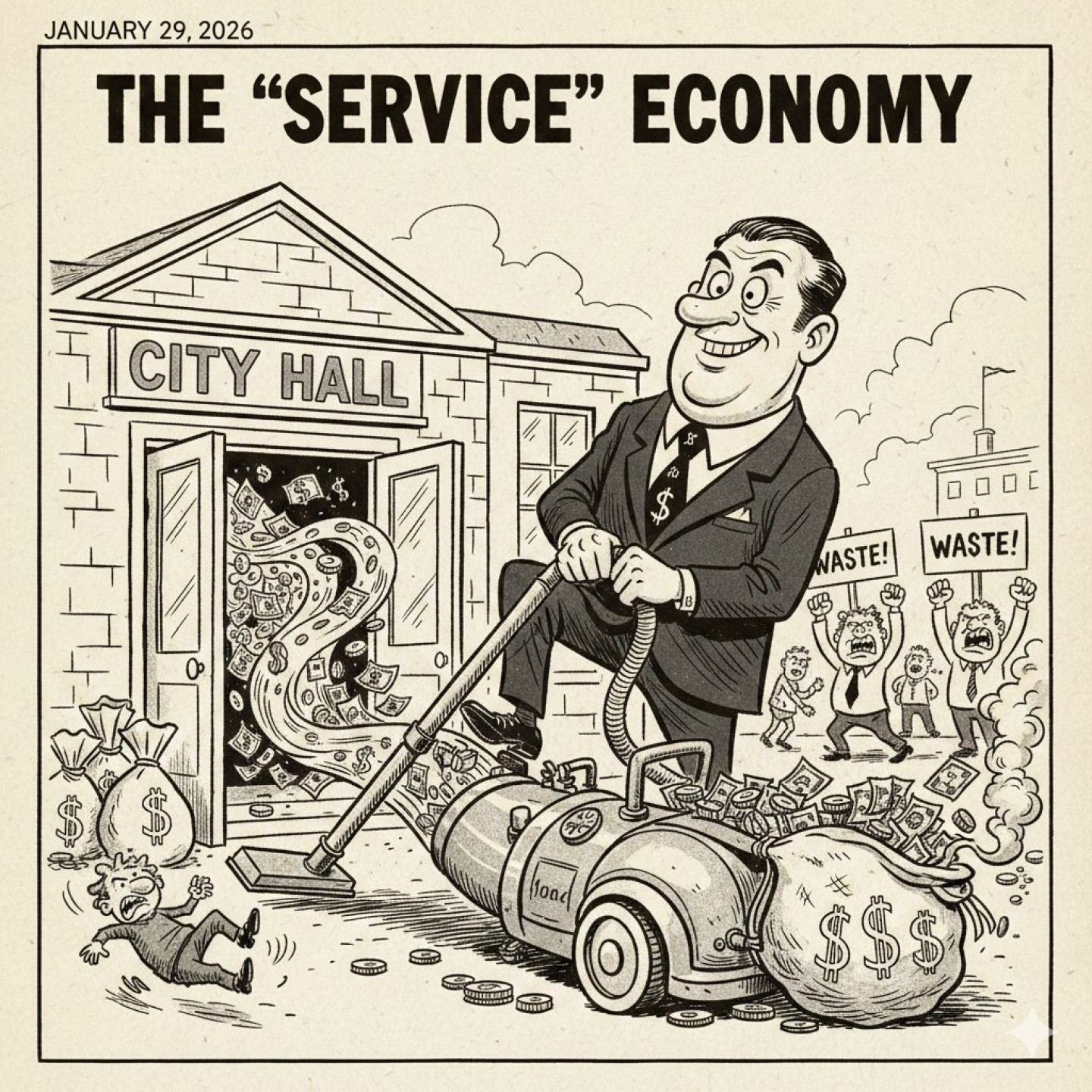
As the new city council and mayor settle in, a nagging issue at hand is the state-required Comprehensive Plan update. The last time an update of this kind occurred, the bulk of the task was handled by outside consultants, which is not uncommon or always unwarranted, but usually comes with a hefty price tag. With any type of "professional service" and even those as minor or trivial as copyright/trademark registration or the purchase of website domains, one can always find service provider experts waiting to take some or all of the burden.

According to the Washington RCWs concerned with comprehensive plans, community input is blatantly required, encouraged, and emphasized in the most obvious terms an RCW can muster. The current comprehensive plan is thoroughly padded but often reads like a copy-and-paste of an early Wikipedia post, gloating about the "recent completion of Highway 395", a landmark event that occurred nearly 40 years ago at the time of this writing. We couldn't find a single person serving in the local Chamber of Commerce, Connell Community Club, or school board who received any notice or request for input to the comprehensive plan at any time in the last 10 years.

Anyone who had the opportunity to review the document certainly would have detected all the language present, outlining plans to effectively turn Connell into another King City (truck stop). If the adult bookstore and cabaret-licensed establishment provisions weren't enough, simply follow the trail of unnecessary Light Industrial rezoning operations that were sold in council meetings as "little cleanups to the codes". All of the code adjustments were made to the tune of a few thousand dollars, and to what benefit? It was hard to tell that growth was the goal when Ace Hardware was nearly run off because they were told they needed to buy an equivalent acreage allotment to provide a place for the field mice they were evicting from the development grounds. The city and consultants were reading too far into a Department of Ecology document that was, in all respects, a "best practices" message. There isn't enough land in Washington to do that in every instance of a new building project. Even if the feds decided to start giving up some property, the tribes aren't giving up any land.

AHBL, a large city planning and associated service provider, was contracted by the city at the time of the last update. The firm and City Hall took harsh criticism from locals during the last administration for a variety of issues, usually associated with cost. In 2024, the city council voted to fire AHBL, but the former city administrator (Koch) and previous mayor (Barrow) doubled down on their position, electing to keep the firm under hire. Following the vote, the city administrator was furnished with a list of over 1,200 similar firms in Washington and a dozen within 50 miles as alternatives. At the next council meeting, she claimed she could only find 2 or 3 competing companies, but they either didn't want the job or were too expensive.

The responsibility falls on the council if the mayor won't provide accountability. AHBL is just a service provider, providing services with stated budgets and estimates. Though we've been unable to locate a detailed itemized invoice in most cases surrounding questionable costs, the firm tells the client what they're going to do and bills for it legitimately. In interviews conducted with some of their other customers, we received quotes like "they do excellent work", "always on time", and "efficient". However, they are obviously too large a firm for Connell's interests, as a city of this size can't afford upwards of $50,000 for "services" in most months. Whereas, in a city the size of Pasco, being totally fine with paying assistants to the assistants of a major office six-figure salaries, sure, hire the consultants to do the thing. In a services quote document attained from the city, AHBL's price tag on the new comprehensive plan update is in the neighborhood of $60,000. Though this is supposed to be paid for by a grant, the price is roughly 5 times the cost of the last update. Connell may be up an Ace Hardware and a Metro Mart, but we're down a Lamb Weston, and the building permits for new houses haven't been keeping up with our nearest neighbors -- how is the exact same exercise in a document revision with public comment now 5 times what it cost a few years ago?

What Is Not Required (But Often Claimed)

The following are not minimum legal requirements unless triggered by other facts:

❌ Hiring a consultant
❌ Rewriting the entire plan
❌ Adopting every optional Commerce model policy
❌ County approval of the city’s plan
❌ A “comprehensive rewrite” if targeted amendments achieve compliance

Bottom-Line Compliance Test for Connell

Connell is compliant only if all of the following are true by December 31, 2026:

✔ City Legislative action taken
✔ Public participation program followed
✔ 60-day Commerce notice completed
✔ Mandatory elements updated and consistent
✔ Development regulations aligned
✔ Countywide policies honored

The Origins of Contemporary City Planning

The origins of modern planning can be traced to the City Beautiful movement of the early 20th century, an era focused on the physical development of cities, famously captured in Daniel Burnham’s 1909 plan for Chicago. This period was followed by the landmark 1926 Supreme Court decision in Village of Euclid v. Ambler Realty, which established the constitutionality of zoning and provided the legal bedrock for the comprehensive plans we use today.

For decades following World War II, the field was dominated by a top-down, expert-led model articulated by thinkers like T.J. Kent. This rational planning process positioned city councils as the primary client and called for limited public participation. However, by the 1990s, a significant shift occurred. Influenced by the rise of advocacy planning, a new approach centered on visions and values emerged as a direct reaction to the perceived rigidity of the expert-led model. This modern paradigm emphasizes robust community participation as an essential component for creating plans that reflect a community's unique identity and aspirations.

Washington’s approach to growth planning began in 1990, when the Legislature adopted the Growth Management Act (GMA). Lawmakers were responding to a growing concern that uncoordinated development was straining infrastructure, degrading natural resources, and undermining long-term economic stability. The GMA established a framework requiring local governments to plan deliberately, using data, public input, and long-range coordination.

At the center of that framework is the comprehensive plan—a legally binding, 20-year policy document that guides nearly every land-use and infrastructure decision a local government makes.

A Plan Built by the Community

Comprehensive plans are not meant to be written behind closed doors. State law requires early and continuous public participation, ensuring that residents, property owners, businesses, and community organizations have meaningful opportunities to shape local priorities.

Franklin County’s original comprehensive plan, adopted in the mid-1990s, illustrates how this process works. As the county prepared for growth driven by agriculture, food processing, and regional employment centers like the Tri-Cities, officials gathered public input through countywide questionnaires, targeted interviews with city leaders, and a series of public meetings held across the county.

That outreach helped identify local concerns that still resonate today: housing availability, infrastructure capacity, protection of agricultural land, and the desire to maintain rural character while accommodating growth. Those values became the foundation of the county’s planning policies.

What a Comprehensive Plan Must Include

Under the Growth Management Act, every comprehensive plan must include a coordinated set of required elements. Each element addresses a different aspect of community life, but they are legally required to work together.

At a minimum, plans must include:

  • Land Use – Identifies where residential, commercial, industrial, and open space uses will be located and at what intensity.
  • Housing – Plans for sufficient housing to serve all income levels and household types.
  • Capital Facilities – Identifies public facilities, such as parks, buildings, and roads, and explains how they will be funded.
  • Utilities – Addresses water, sewer, stormwater, and other essential services.
  • Transportation – Coordinates roads, transit, walking, and biking systems with land-use decisions.
  • Rural Development (counties) – Protects rural character while allowing limited development.
  • Climate Change and Resiliency – Prepares communities to reduce emissions and respond to climate-related risks.

These elements are not optional. Failure to keep them consistent can expose a city or county to legal challenges before the Growth Management Hearings Board.

Land Use: The Map That Guides Everything

The Land Use element sets the overall direction for growth. It is typically illustrated through a future land-use map that shows where housing, commerce, industry, and public facilities are expected to locate over the next two decades.

In Franklin County, land-use planning must balance urban growth with the protection of agricultural lands that form the backbone of the local economy. The GMA requires counties to conserve resource lands while directing most development to designated urban growth areas.

State law also requires land-use plans to address issues such as groundwater protection, wildfire risk, and the siting of essential public facilities—issues of particular importance in eastern Washington’s arid climate.

Housing: Planning for a Growing and Changing Population

Housing has become one of the most closely watched elements of comprehensive plans statewide. Washington law now requires jurisdictions to plan for a full range of housing types and income levels, including emergency housing, workforce housing, and market-rate development.

Recent changes to state law require local governments to identify barriers to housing production and to address past policies that contributed to exclusion or displacement. For growing communities in Franklin County, this means planning not only for population growth, but for changing household sizes, workforce needs, and affordability challenges tied to regional job growth.

Infrastructure: Paying for Growth

The Capital Facilities and Utilities elements answer a critical question: Can the community afford the growth it is planning for?

Under the GMA, local governments cannot plan for growth unless they can demonstrate that public services—such as water, sewer, roads, and parks—will be available when needed. Just as importantly, they must identify realistic funding sources, whether through impact fees, utility rates, grants, or local taxes.

This requirement directly ties long-range planning to local budgets and capital improvement programs.

Transportation: More Than Just Roads

Transportation planning in Washington has evolved well beyond vehicle traffic. Comprehensive plans must now address multimodal transportation, including walking, biking, freight, and transit.

For Franklin County communities, this includes coordinating local transportation plans with state highways, agricultural freight routes, and regional transit systems, while also improving safety and access for non-drivers.

Climate Resilience: A New Planning Requirement

In 2023, Washington added the Climate Change and Resiliency element as a mandatory part of comprehensive plans. This reflects growing concern about wildfire, heat, drought, and infrastructure vulnerability.

Local governments must now include policies aimed at reducing greenhouse gas emissions and improving the community’s ability to prepare for and recover from climate-related hazards—an issue with clear relevance in eastern Washington.

Keeping Plans Current

Comprehensive plans are not static documents. The GMA requires periodic updates—currently every 10 years—to ensure plans reflect updated population forecasts, new state laws, and evolving community priorities.

Franklin County has gone through multiple update cycles since its original adoption, adjusting to legislative changes and growth patterns while maintaining consistency with state planning goals.

From Vision to Law

Perhaps the most important feature of a comprehensive plan is its legal authority. Zoning codes, development regulations, and capital budgets must be consistent with the adopted plan.

That means the plan is not just aspirational—it is enforceable. If a land-use designation allows mixed-use development, zoning must permit it. If an area is planned for rural residential use, industrial development cannot be approved there.

Why It Matters

Comprehensive plans are the backbone of Washington’s growth-management system. They translate community values into policy, coordinate growth with infrastructure, protect natural and agricultural resources, and provide predictability for residents and investors alike.

Most importantly, they work best when the public is engaged. Participation—whether through surveys, public meetings, or written comments—directly shapes how communities grow and adapt over time.


Sources

Gemini_Generated_Image_lbk6z5lbk6z5lbk6

WA State 95% Nicotine Tax pounds 'neuroprotector' like a villain

-CONNELLWA.COM Staff

January 15, 2026

Key Takeaways

  • The Price Jump: A 5-can roll of nicotine pouches has surged from $30 to nearly $60 in Washington.
  • The Science: Emerging research suggests isolated nicotine may have neuroprotective benefits for Parkinson's and Alzheimer's.
  • The Legal War: Lawsuits from retailers and corporations like Comcast are challenging the procedural validity of the new tax.
  • The Vote: The tax passed by a razor-thin 50–47 margin in the House, highlighting deep political division.

The Washington Nicotine Tax at a Glance

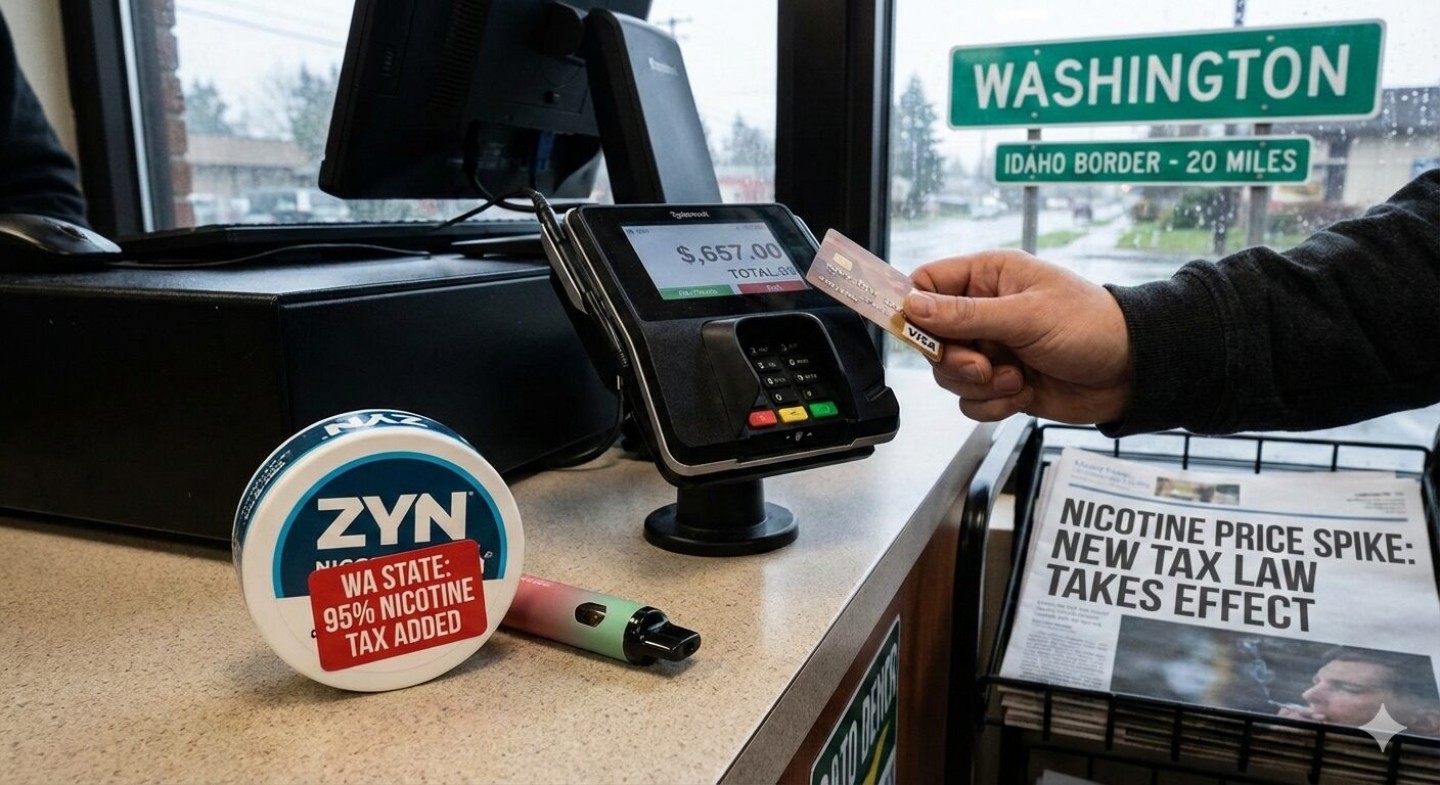
  • The Change: As of January 1, 2026, Washington state has expanded its 95% excise tax to include all nicotine products, including synthetic pouches (like Zyn) and vapes.
  • The Impact: Prices have effectively doubled. A $30 roll of pouches now costs nearly $60, driving many residents to buy in bulk across the Idaho border.
  • The Conflict: While the FDA recognizes these products as a less harmful alternative for smokers, Washington state treats them with the same financial deterrence as combustible tobacco.
  • The Science: Experts argue that while nicotine is addictive, it is not the primary cause of cancer—that comes from tobacco smoke. Some research even suggests isolated nicotine has neuroprotective benefits.
  • The Legal War: Retailers are currently suing the state, arguing that the Department of Revenue is "unlawfully rewriting" the law to tax vapes twice.
Newly Taxed (95%)Exempt / No Change
Zyn / Nicotine Pouches (Synthetic)Traditional Cigarettes (Fixed per-pack tax)
Disposable Vapes (e.g., ElfBar, Breeze)FDA-Approved Cessation (Patches, Gum)
Nicotine E-Liquids (All strengths)0% Nicotine Juice (Stays at volume tax)
Synthetic Nicotine (Any form)Prescription Cessation (Chantix/Varenicline)

Washington State — January 15, 2026 — For years, nicotine has been the undisputed villain of public health. But as of the new year, a massive tax hike in Washington state has turned a scientific debate into a pocketbook crisis, forcing a confrontation between two very different views of the molecule: is it a deadly toxin or a tool for survival?

Under the newly enacted Engrossed Substitute Senate Bill 5814, Washington now applies a 95% excise tax to all products containing nicotine—including synthetic nicotine pouches like Zyn. The move has effectively doubled the price of these products overnight, sending a wave of "tax refugees" across the border to Idaho.

The Legislative Breakdown

Senate Bill 5814 was a centerpiece of the 2025 legislative session’s budget package, aimed at closing a projected multibillion-dollar shortfall. The bill passed both chambers by narrow margins, primarily along party lines, though it faced notable internal opposition from some members of the majority party.

Executive Action: Governor Bob Ferguson signed the bill into law on May 20, 2025, with the nicotine tax provisions officially taking effect on January 1, 2026.

Senate Vote (April 24, 2025): Passed 26–22. Despite the Democratic majority, three Democrats joined all 19 Republicans in voting "no," citing concerns over the regressive nature of the sales tax expansion.

House Vote (April 23, 2025): Passed 50–47. In the House, seven Democrats broke ranks to vote against the measure, nearly defeating the bill.

Those in favor of the nicotine tax are all Democrats

ChamberYeasNaysResult
Washington State Senate2622Passed (April 24, 2025)
Washington State House5047Passed (April 23, 2025)

For consumers like Jeff Long, who spoke to 4 News Now in Spokane, the math is simple. A five-can roll of nicotine pouches that cost $30.00 last year now retails for nearly $60.00. "Basically, you're going to end up paying double," Long said. "So you either pay it or you drive to Idaho."


The Science: Is Nicotine the Problem?

The core of the "Nicotine Paradox" lies in a distinction often lost in public policy: the difference between the molecule itself and the smoke that carries it.

Public health experts like Dr. Peter Attia and neuroscientist Dr. Andrew Huberman have increasingly pointed out that while nicotine is highly addictive, it is not a primary carcinogen. The cancer and lung disease associated with smoking are largely caused by the combustion of tobacco leaf, which releases thousands of toxic chemicals like formaldehyde and heavy metals.

The Brain’s Accelerator and Brake

In the brain, nicotine acts as a powerful stimulant by hijacking the reward system. Huberman describes the process as a "two-pronged attack" on the dopamine system: nicotine triggers a surge of dopamine (the "accelerator") while simultaneously suppressing GABA (the "brake"), the neurotransmitter that usually regulates those surges.

This results in sharpened focus, reduced appetite, and increased metabolic rate. Research from 2024 also suggests nicotine may have neuroprotective properties, potentially slowing the progression of Parkinson’s disease and counteracting genetic risks for Alzheimer’s.

The Mendelian Counter-Proof

A landmark 2024 Mendelian randomization study—a type of research that uses genetic markers to isolate behavior—provided further evidence for this theory. By comparing people with different genetic predispositions for nicotine metabolism, researchers found that the devastating diseases linked to smoking were strongly tied to the heaviness of smoking (how much tobacco was burned) rather than the nicotine levels themselves.


The Counter-Narrative: Why the Tax Exists

Despite the harm-reduction arguments, critics of the "isolated nicotine" theory argue that "safer" does not mean "safe."

1. The Youth Epidemic

Health organizations point to alarming trends. A 2024 USC study revealed that nicotine pouch use among American teens doubled in a single year. Critics argue that "Zynfluencer" culture on social media targets a new generation that never would have touched a cigarette, hooking them on high-dose nicotine that can disrupt developing brains.

2. Cardiovascular Strain

While nicotine may not cause cancer directly, it remains a potent vasoconstrictor. Constant use keeps the heart rate elevated and blood vessels constricted, which can lead to long-term hypertension and increased heart attack risk.


Legal Battles: The 95% Tax Under Fire

Since its enactment, SB 5814 has become one of the most litigated tax measures in recent Washington history. As of early 2026, the law faces two primary legal challenges:

1. The "Vape Tax Interpretation" Petitions

Two petitions have been filed against the Washington Department of Revenue (DOR). These challenges focus on the DOR's decision to apply the 95% tax to vapor products.

  • The Argument: Petitioners argue the DOR is "unlawfully rewriting the law." They contend that vapor products are already governed by a separate tax (RCW 82.25) which SB 5814 did not explicitly repeal.
  • The Claim: Lawsuits allege the tax violates the Washington Constitution's "single-subject rule," as the bill's title did not clearly disclose a massive increase in vapor taxes.

2. The Comcast Challenge

A major lawsuit filed by Comcast challenges the same bill (SB 5814) regarding its taxation of digital advertising. Legal analysts suggest that if the court finds the advertising portion of the bill unconstitutional, the procedural validity of the entire bill—including the nicotine tax—could be in jeopardy.

A Regulatory Split

The conflict is perfectly captured by the differing stances of the state and federal governments. In 2025, the FDA authorized the sale of several nicotine pouch brands, concluding they were "appropriate for the protection of public health" as a less harmful alternative for adult smokers. Washington state, however, has chosen a path of broad deterrence, treating these pouches with the same—and in some cases higher—financial weight as the cigarettes they were meant to replace.

Frequently Asked Questions (FAQ)

Does this tax apply to Zyn pouches?

Yes. This was the primary target of SB 5814. Previously, synthetic nicotine pouches occupied a "tax loophole" in Washington. They are now classified as "Other Tobacco Products" (OTP) and subject to the full 95% rate.

Why are my vape pods suddenly $10 more expensive?

The Department of Revenue has interpreted the new law to include any product containing nicotine. Because the tax is based on the price (ad valorem) rather than the amount of liquid, high-value disposables and pod systems have seen the most dramatic price hikes.

Is there a legal challenge to stop this?

Yes. In late December 2025, two major petitions were filed in Thurston County Superior Court. The plaintiffs argue that the legislature only intended to tax nicotine pouches, and the DOR "unilaterally" expanded the tax to vapes without a new vote. An emergency stay hearing is currently pending; if granted, the tax on vapes could be paused while the case proceeds.

Are "nicotine-free" vapes affected?

Generally, no. If a product contains 0mg nicotine, it should still be taxed under the old volume-based vapor tax (RCW 82.25) rather than the new 95% nicotine tax. However, some retailers are struggling with the math and may have raised prices across the board.


Sources

Can Local News Be Saved?

Why America’s Local Newspapers Dying

For over a century, the local newspaper was the heartbeat of the American town. It was where you found out about the high school football scores, the zoning board’s latest decision, and which neighbor was celebrating a 50th anniversary. Today, that heartbeat is fading into a profound silence.

As of late 2025, the crisis of the American newspaper has reached a tipping point. While the "death of print" has been a headline for two decades, the nature of the collapse has changed, and it is the smallest, most independent voices that are now being silenced most rapidly.


The 2025 Reality: A Landscape of "News Deserts"

According to the latest Medill State of Local News Report, the U.S. has lost nearly 3,500 newspapers since 2005. But the most alarming trend in 2025 isn't just the total number—it’s where the closures are happening.

In previous years, many closures were the result of large corporate chains merging or "gutting" regional dailies. However, this year marks a shift: the majority of closures are now occurring at small, family-owned, and independent newspapers. These are the very outlets that held the highest levels of community trust.

Key Stats at a Glance:

  • 213 Counties in the U.S. now have no local news source at all.
  • 50 Million Americans live in "news deserts" or counties with only one remaining (often struggling) news source.
  • 75% of Newspaper Jobs have vanished since 2005.

Why the "Small" are Failing

The collapse of the small-town paper isn't due to a lack of interest; it’s a perfect storm of economic and technological shifts.

1. The Ad Revenue Vacuum

For decades, newspapers relied on a "three-legged stool" of revenue: local display ads, subscriptions, and classifieds.

  • The Classifieds: First, platforms like Craigslist and Zillow took the "help wanted" and "real estate" sections.
  • The Digital Giants: Today, Google and Meta (Facebook) command the vast majority of local advertising dollars. A local hardware store that once bought a full-page ad now spends that money on targeted Facebook ads for a fraction of the price.

2. The AI Disruption

In 2024 and 2025, a new threat emerged: Generative AI search. As search engines began providing AI-generated summaries of news stories directly on the results page, the "click-through" traffic to actual news websites plummeted. Medill researchers found that web traffic to the top 100 newspapers has dropped by 45% in just the last four years.

3. The "Ghost" Paper Phenomenon

In many cases, a newspaper doesn't "die"—it becomes a ghost. This happens when a hedge fund or private equity firm buys a small paper, sells the real estate, fires the local reporting staff, and fills the pages with "pink slime" (automated or non-local) content. The masthead stays the same, but the local accountability is gone.


The High Cost of Silence

When a small newspaper fails, the community pays a price that goes far beyond losing a Sunday tradition. Research has consistently shown that in "news deserts":

  • Government spending increases: Without a reporter at town hall, waste and corruption go unchecked.
  • Municipal bond yields rise: Investors view towns without a newspaper as "riskier," leading to higher interest rates for local projects.
  • Voter turnout drops: People are less likely to participate in local elections when they don't know who the candidates are.

Is There a Path Forward?

While the picture is bleak, there are "Bright Spots." Over 300 local news startups have launched in the past five years. Many are digital-only nonprofits that rely on memberships rather than ads.

However, there is a catch: these startups are almost entirely concentrated in wealthy, urban areas. For the rural and lower-income communities that make up the heart of America’s news deserts, the silence remains.

The survival of local news may soon depend not on the "market," but on a fundamental shift in how we value information—treating local journalism not as a commodity, but as a public utility essential to democracy.

The Front Lines of Washington’s News Crisis

Washington State, long a pioneer in digital innovation, is ironically now one of the primary battlegrounds for the survival of local news. While the Puget Sound area remains a relatively "news-rich" environment, a 2025 report from Washington State University (WSU) reveals a state deeply divided by information access.


The Two Washingtons: Deserts and Oases

The WSU report, From News Deserts to Nonprofit Resilience, paints a stark picture of the state’s geography. As of mid-2025, the crisis has localized into specific "hot zones":

  • The Absolute Deserts: Two counties—Ferry and Skamania—now have zero qualifying local news outlets. Residents there must rely on neighboring counties or unverified social media groups for basic civic information.
  • The "Single-Thread" Counties: Five counties (including Wahkiakum and Garfield) rely on a single news source. If that one publisher retires or a chain buys and guts the paper, these counties immediately become deserts.
  • The Originality Gap: Perhaps the most shocking find in the WSU data is that while over 1,000 "outlets" exist in the state, only 353 are actually producing original, locally-reported journalism. The rest are often "ghost" sites or aggregators.

Bright Spots: Defying the Trend

Despite the grim statistics, Washington is home to some of the nation’s most successful "holdouts."

  • The Family Legacy: The Columbian in Vancouver remains one of the few independently owned dailies in the country. The Campbell family is currently transitioning into its fifth generation of local ownership, proving that a deep-rooted commitment to the community can stave off the "hedge fund" model.
  • The Employee Save: In Sunnyside, when a national chain attempted to shutter The Sunnyside Sun, two employees stepped up to buy the paper themselves, preserving a vital voice for the Yakima Valley’s Latino and agricultural communities.
  • Passion for Press: In Connell, the Franklin County Graphic, remains under independent ownership and provides a broad, while highly editorialized scope of news in the community.

The "Murrow" Experiment: A State-Funded Solution?

Washington is currently running one of the nation's most ambitious experiments to save local news: the Murrow News Fellowship.

Funded by the state legislature and managed by WSU, this program has placed 16 full-time reporters in underserved newsrooms across the state. These fellows aren't just interns; they are professional journalists covering high-stakes beats like housing, water rights, and local government.

However, the program’s future is a constant topic of debate in Olympia. During the 2025 legislative session, a proposed "Washington Local News Sustainability Program"—which would have taxed Big Tech companies to create a permanent fund for journalism—failed to pass, leaving the fellowship to rely on year-to-year budget approvals.


What You Can Do

The "death" of local news isn't an inevitability; it's a financial shift. If you live in Washington, you can help by:

  1. Direct Subscriptions: A $10/month subscription to your local paper often provides more community value than any streaming service.
  2. Nonprofit Support: Outlets like Cascade PBS and The Seattle Times’ Save the Free Press initiative rely on community funding.
  3. Local Ad Placement: If you own a business, consider shifting even 10% of your Facebook/Google ad budget back to a local publication.

Sources & Further Reading


Copyright 2002-2026 CONNELLWA.COM

All Rights Reserved.

BEVON DAVIS, EDITOR

IN COOPERATION WITH GCACC

Contact Info

PO BOX 156 Connell, WA